Beekeeping practice
Extended-release oxalic acid: lessons from an old field note
The original 2024 post described a home-prepared oxalic-acid treatment using glycerol and cellulose sponges. The photographs are part of that history. The recipe is not a general recommendation to repeat it.
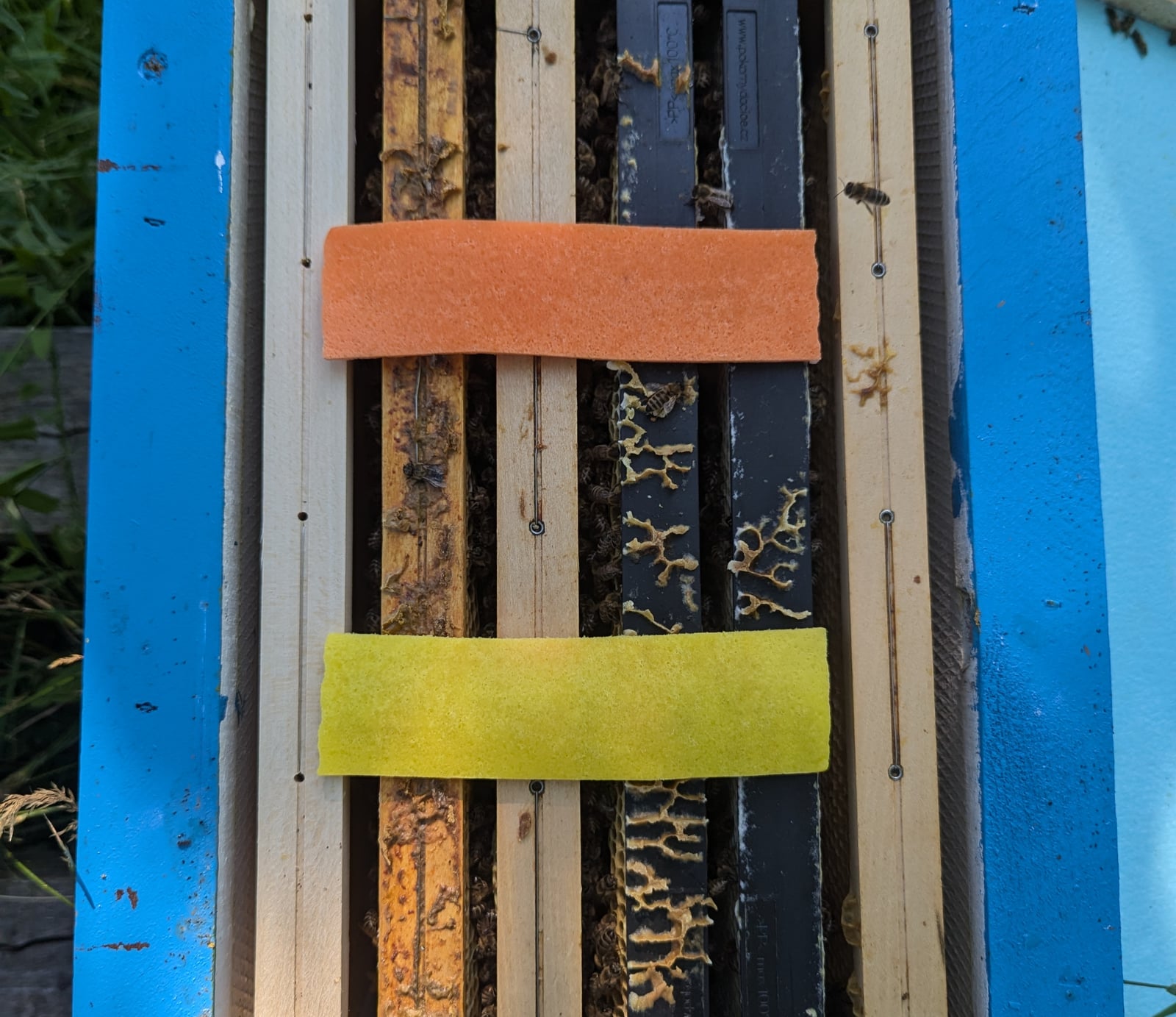
What the original account can—and cannot—show
The author reported encouraging observations in an apiary. A personal account without a controlled comparison, a complete monitoring record and independent safety assessment cannot establish a product’s effectiveness or residue safety.
Applying something after a honey flow does not, by itself, prove that contamination is impossible. The original assurances of no adverse effects and virtually mite-free colonies should not be read as established outcomes for other beekeepers.
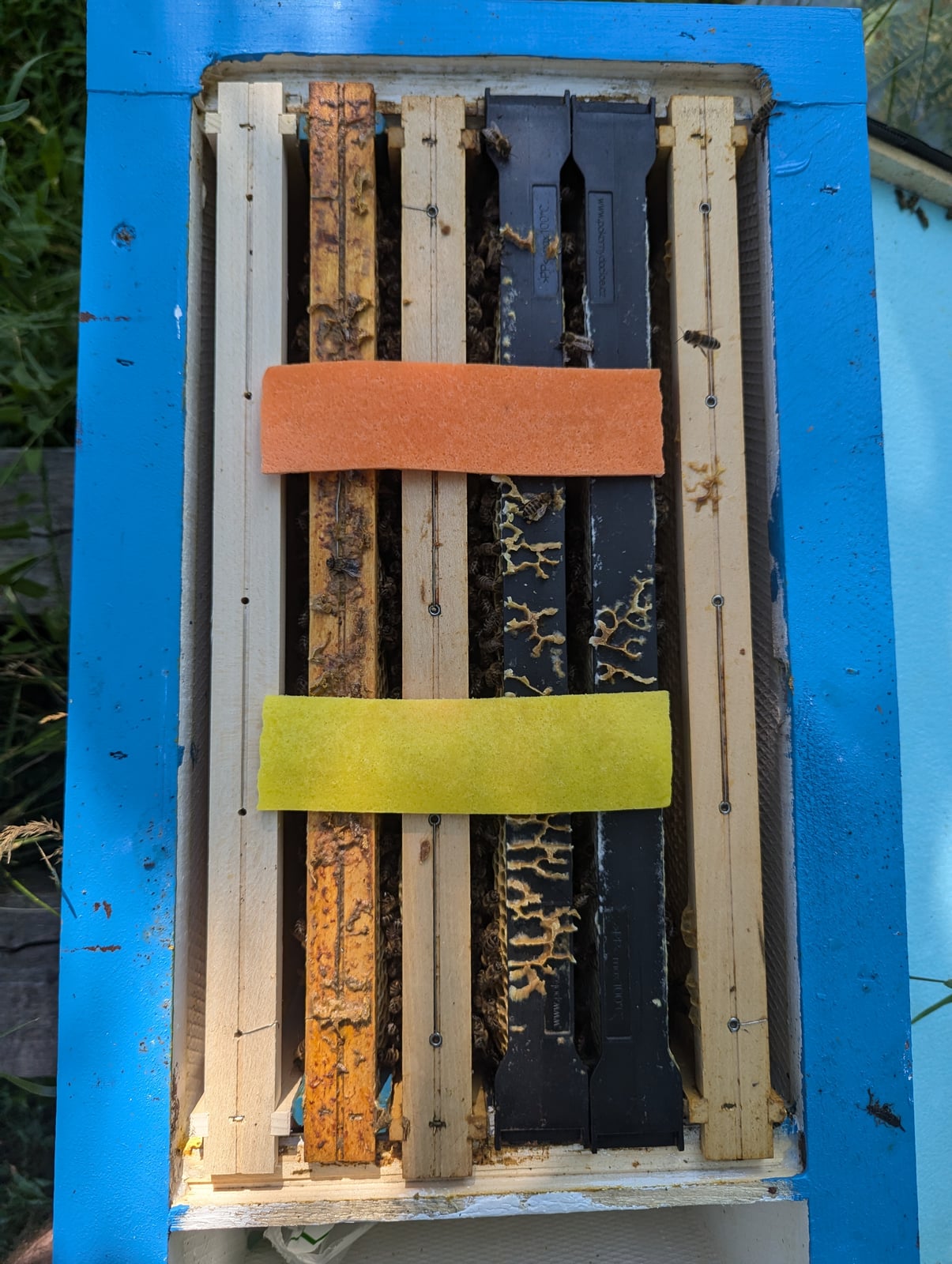
A shared ingredient does not make products interchangeable
An authorised slow-release product is not equivalent to mixing the same active ingredient into a household material. Formulation, dose, exposure and permitted use can differ.
The US EPA has discussed registered slow-release oxalic-acid products and the rules affecting unregistered preparations. That US information is not a statement of what is permitted in the Czech Republic or any other country. Check the current local authorisation and the exact product label.
What is worth retaining from the experience
The useful lesson is to record a treatment as a testable intervention: the starting result, the product and actual work, later monitoring and colony observations.
Keep the original observations distinct from conclusions. A photograph of treatment material in a hive does not verify the dose, effectiveness or safety. Do not use the photographs as placement instructions.
Where to take a current decision
Start with a recognised monitoring plan and consult a local inspector, veterinarian or qualified adviser as appropriate. Use only a method permitted in your jurisdiction and follow its full instructions.
The former mixing and heating recipe has intentionally not been republished. This keeps the archive useful without presenting an old experiment as current treatment guidance.
Sources & further reading
ApiNote · iOS & Android
Good notes make the next visit easier.
Give every colony a history you can find again. ApiNote is available for iOS and Android, free for up to five hives.
Compare Free & ProKeep exploring
Varroa management: monitor, act and check the result
Build a traceable varroa management record: sampling method, mite result, locally appropriate action and follow-up. No universal treatment calendar or dose.
UpdatedOxalic acid vaporization: what to check before treatment
Understand the decisions around oxalic acid vaporization: monitoring, brood status, the authorised product label, operator protection and follow-up records.
Updated
What to record in a beekeeping logbook
A practical hive record checklist: inspections, queens, feeding, treatments, mite counts and harvests, with clear next actions for your next apiary visit.
Updated