ApiNote guides
What to record in a beekeeping logbook
A useful logbook connects a date, a colony and a decision. It does not need a paragraph about every frame, but it should explain why you did something and what you intend to check next.
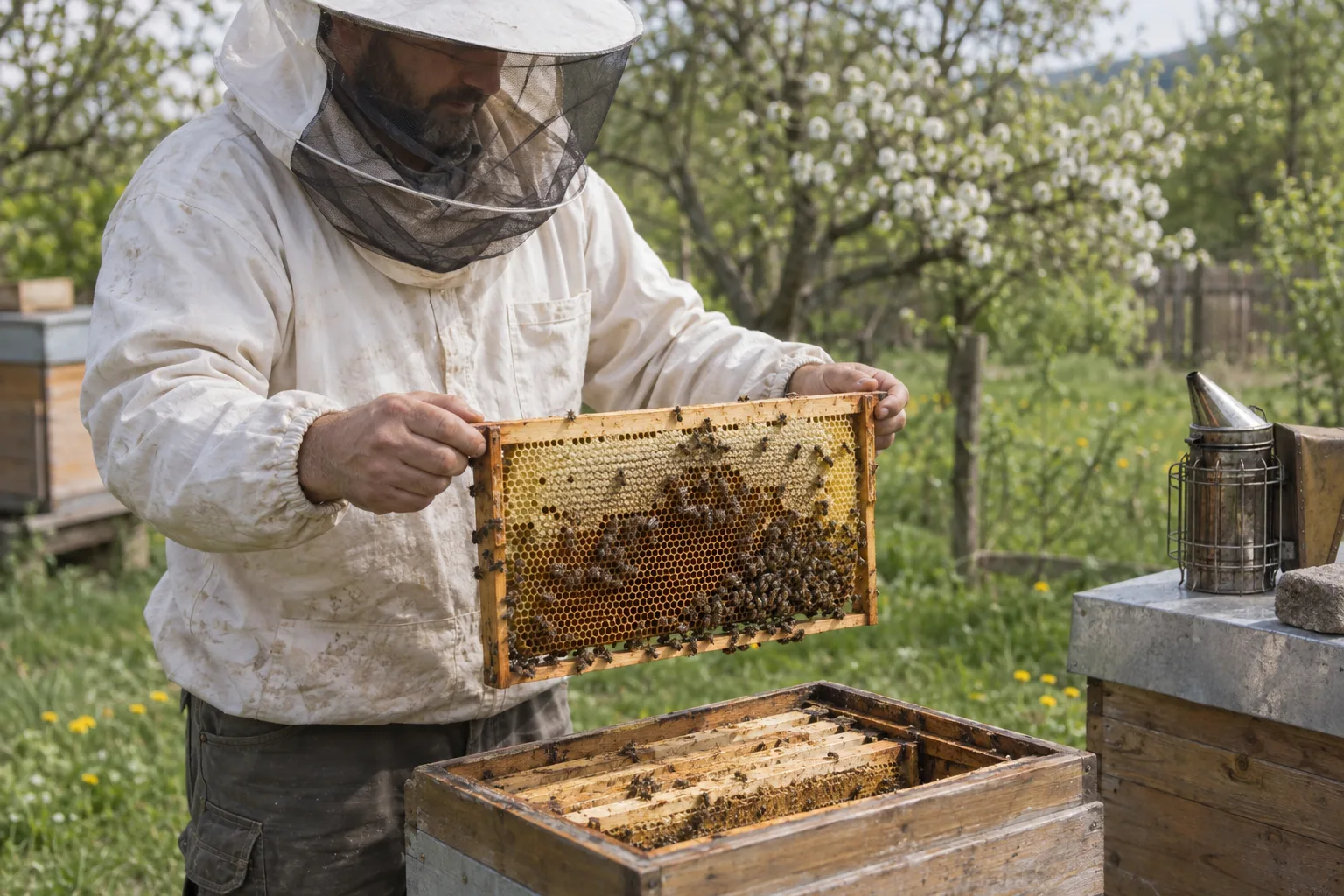
Keep a stable identity for each colony
Start with the apiary and hive identifier. Record queen changes, splits and moves rather than silently reusing a name for a different history. Otherwise, a comparison of two seasons can accidentally compare different colonies.
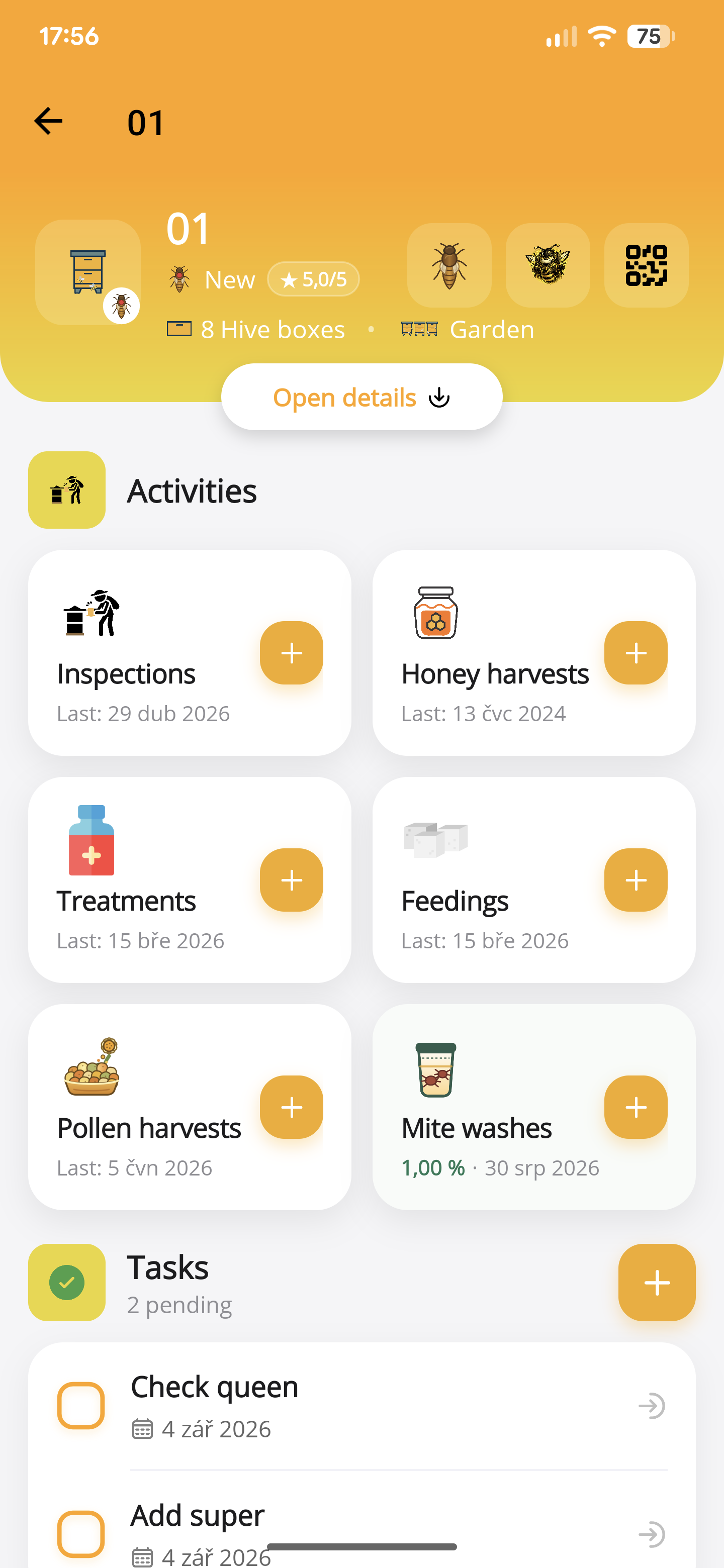
In ApiNote, hive records sit within an apiary and bring several activity types together. Use that structure instead of maintaining separate, unconnected lists for every job.
The core record checklist
Use this as a working prompt, not a requirement to disturb a colony just to fill every field. Mark things you did not check as unknown.
- Inspection: date, brood observations, colony condition, stores and notes.
- Queen: identity where known, origin, introduction or replacement and your observations.
- Feeding: what you supplied, amount and date.
- Treatment: the actual product, application details and required follow-up; keep any additional statutory records.
- Mite monitoring: sampling method, sample size, count and calculated result where applicable.
- Harvest: date, hive or apiary, quantity and a note connecting it to your own batch records.
- Next action: the job, relevant hive or apiary and a sensible review date.
Separate observation from interpretation
“No eggs seen during a short check” does not establish why eggs were absent. Keep the observation in your notes and add the follow-up you agreed with your mentor or inspector.
Likewise, a drop in yield after a treatment does not show that the treatment caused it. Weather, forage, swarming, colony strength and incomplete data can all affect comparisons.
Make the notes useful outside the apiary
At the end of a visit, check that work has been saved to the correct hive. Before the next visit, read the previous note and the outstanding task together.
Periodically export important records. ApiNote can export selected datasets as CSV files, with multiple datasets bundled into a ZIP. Keep a copy somewhere you control; local photos need their own backup.
ApiNote · iOS & Android
Good notes make the next visit easier.
Give every colony a history you can find again. ApiNote is available for iOS and Android, free for up to five hives.
Compare Free & ProKeep exploring
How to record a hive inspection in ApiNote
Keep brood observations, stores, queen notes and follow-up work with the right hive. Learn the manual and voice inspection workflow in ApiNote.
Updated
Make sense of your beekeeping statistics
Compare honey harvests and colony records without confusing missing data with poor performance. A practical guide to using ApiNote statistics and CSV export.
Updated
Varroa management: monitor, act and check the result
Build a traceable varroa management record: sampling method, mite result, locally appropriate action and follow-up. No universal treatment calendar or dose.
Updated