Beekeeping practice
Ivy in flower: autumn forage, not a winter guarantee
A quiet hedge suddenly sounds alive. Bees are working small green flowers that barely looked like flowers at all: ivy. It is a late-season resource worth noticing. But a busy patch answers one question—are insects using these flowers?—without answering another: does each of your colonies have enough food? Here is how to make that observation useful without asking it to prove too much.
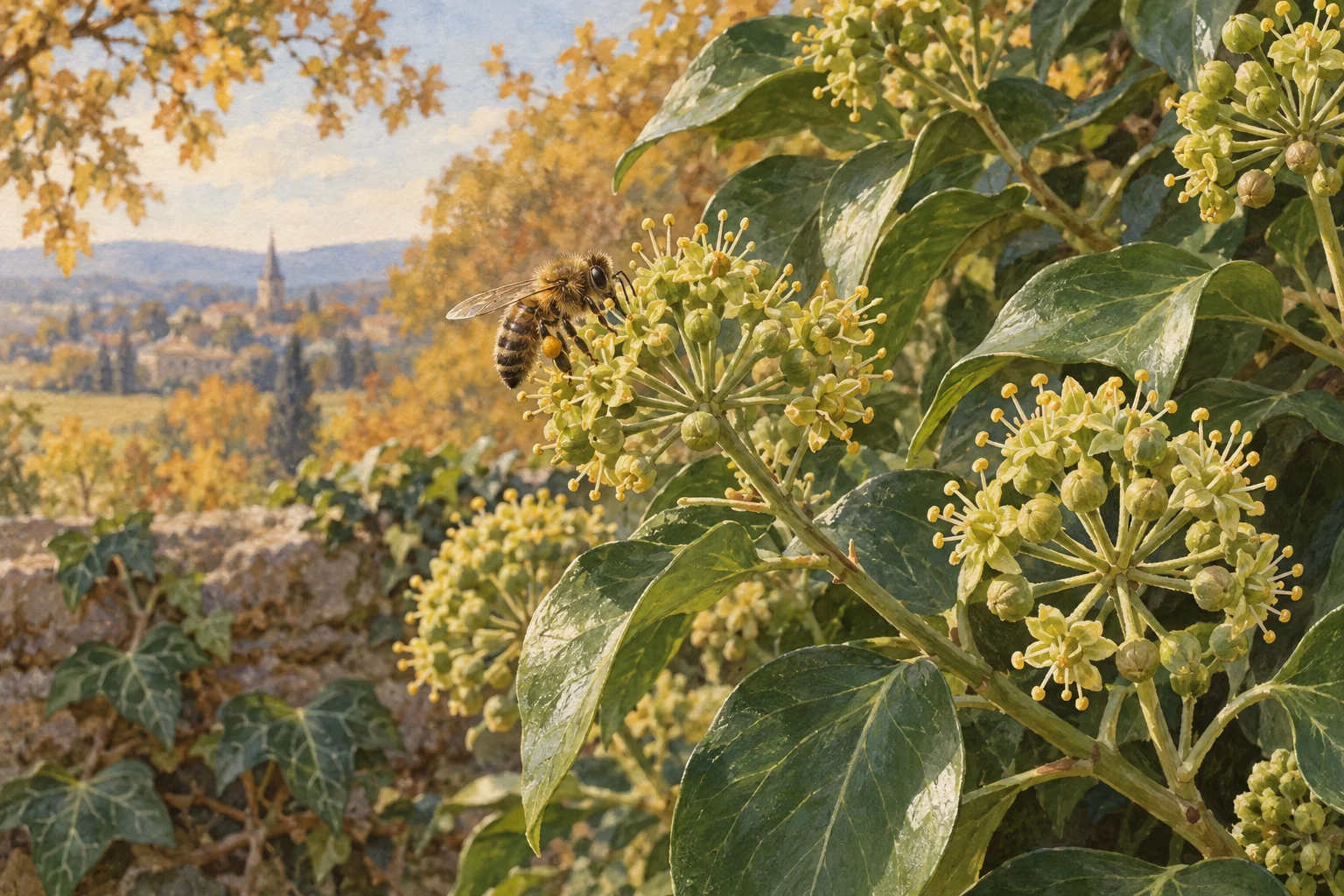
Look for flowering growth, not just an ivy-covered wall
Ivy changes appearance as it matures. The familiar lobed leaves belong to its juvenile growth; flowering shoots have unlobed, often oval or heart-shaped leaves. Their small yellow-green flowers form rounded clusters. The Royal Horticultural Society gives September to November as the flowering period in its UK guidance and notes that maturity can take around ten years.
A green carpet of young ivy is therefore not evidence of an autumn nectar source. Look for actual open flowers, then note whether insects are visiting them. This article concerns autumn in temperate Europe, especially the British context of the research below. Use local flowering and weather observations rather than copying those months into another climate.
An impressive pollen result—with a specific meaning
Garbuzov and Ratnieks studied ivy forage in Sussex, England. In their study, pollen traps at six hives in two locations collected autumn pollen pellets of which an average 89% were from ivy. Separately, observations on ivy flowers found that 80% of the honey bees were collecting nectar only. The paper appeared online in 2013 and in the January 2014 journal issue.
Those figures describe sampled pollen and observed foraging behaviour. They do not mean that 89% of a colony’s winter stores were ivy honey, or that every European apiary receives the same contribution. The result gives a good reason to investigate flowering ivy locally; it does not replace an assessment of a particular colony.
The University of Sussex’s field guide also shows why a buzzing patch is not simply a gathering of your honey bees. Ivy attracts wasps, hoverflies, other flies, butterflies and several kinds of bee. Record only the visitor groups you can recognise; an unknown insect can stay unknown in your notes.
Make a short observation you can repeat
Choose a patch you can watch safely from the ground without blocking people or disturbing its visitors. Give it a recognisable name, such as “ivy at the orchard gate”. A brief, repeatable visit is more useful than a sweeping claim that the whole area has a strong flow.
For your own comparisons, use the same patch and a similar observation period when practical. This is a personal field-note routine, not a scientific survey or a way to estimate nectar yield. Write down what changed between visits so a cooler, wetter afternoon is not silently compared with a sunny morning.
- Date, time and patch name.
- Flowering stage: buds, open flowers, or mostly finished.
- Conditions actually observed, such as sunshine, wind or rain.
- Visitor groups you recognised, with uncertainty left visible.
- A photograph of the same patch and the next observation you want to make.
Keep the flower note separate from the colony check
Consider this invented example: “2 October, orchard gate, 13:10. Ivy has open flowers. Honey bees and several flies visiting during a sunny spell.” That is a useful record of a place and a moment. Adding “all colonies ready for winter” would turn it into a conclusion the observation did not establish.
Keep each colony’s food-reserve assessment and any feed supplied in its own record, using a method appropriate to your hive and local guidance. A flower visit does not measure stored food, and it does not show which colony a bee came from. If the reserves are uncertain, resolve that uncertainty directly rather than waiting for a presumed ivy flow to solve it.
The same distinction helps when looking back next year. “Ivy flowering” is a seasonal observation. “Stores assessed on this date, by this method” is colony information. Together they provide context; neither should quietly stand in for the other.
Leave yourself a next step
Decide what you want to learn next: whether the same patch is still flowering, whether visitors return in different conditions, or whether a colony needs a follow-up stores assessment. Set separate actions when the questions differ.
In ApiNote, you can attach a task to the relevant apiary or hive, choose its timing and enable a device reminder. For example, “Revisit orchard-gate ivy and photograph flowering stage” is a clear apiary task. Keep a colony’s follow-up check attached to that colony. Reminder delivery depends on phone permissions and system settings, so continue to review the task list.
The useful outcome is a local record you can compare, not a universal October rule. Your next visit should add evidence: another dated flower observation, an actual colony assessment, or both.
Sources & further reading
ApiNote · iOS & Android
Good notes make the next visit easier.
Give every colony a history you can find again. ApiNote is available for iOS and Android, free for up to five hives.
Compare Free & ProKeep exploring
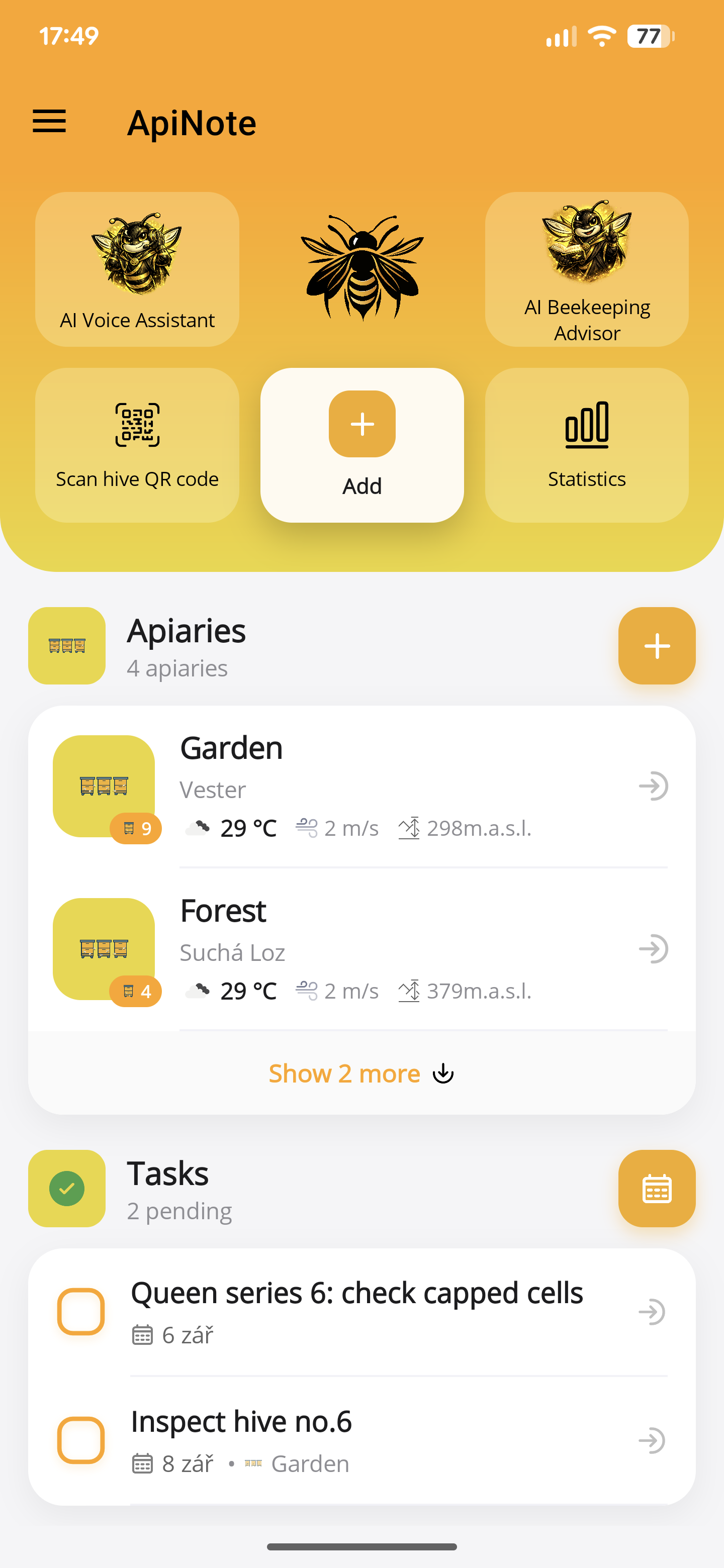
How to create a hive task and reminder in ApiNote
Turn a follow-up check into an ApiNote task. Choose the hive, set a date and optional phone reminder, then mark the work complete in your calendar.
Updated
Preparing bees for winter: a colony-by-colony checklist
Review stores, colony condition, varroa follow-up and hive protection before winter. A practical checklist that avoids one-size-fits-all dates and feed targets.
Updated
Keep a useful record of weather and forage
Track bloom dates, weather interruptions and colony observations at your apiary. Build a local seasonal record without confusing forecasts with field evidence.
Updated