Beekeeping practice
Starting beekeeping: what to arrange before your first hive
Buying a hive is the easy part. Before bees arrive, you need a suitable place, someone to learn from and enough time to look after a living colony when it needs you.
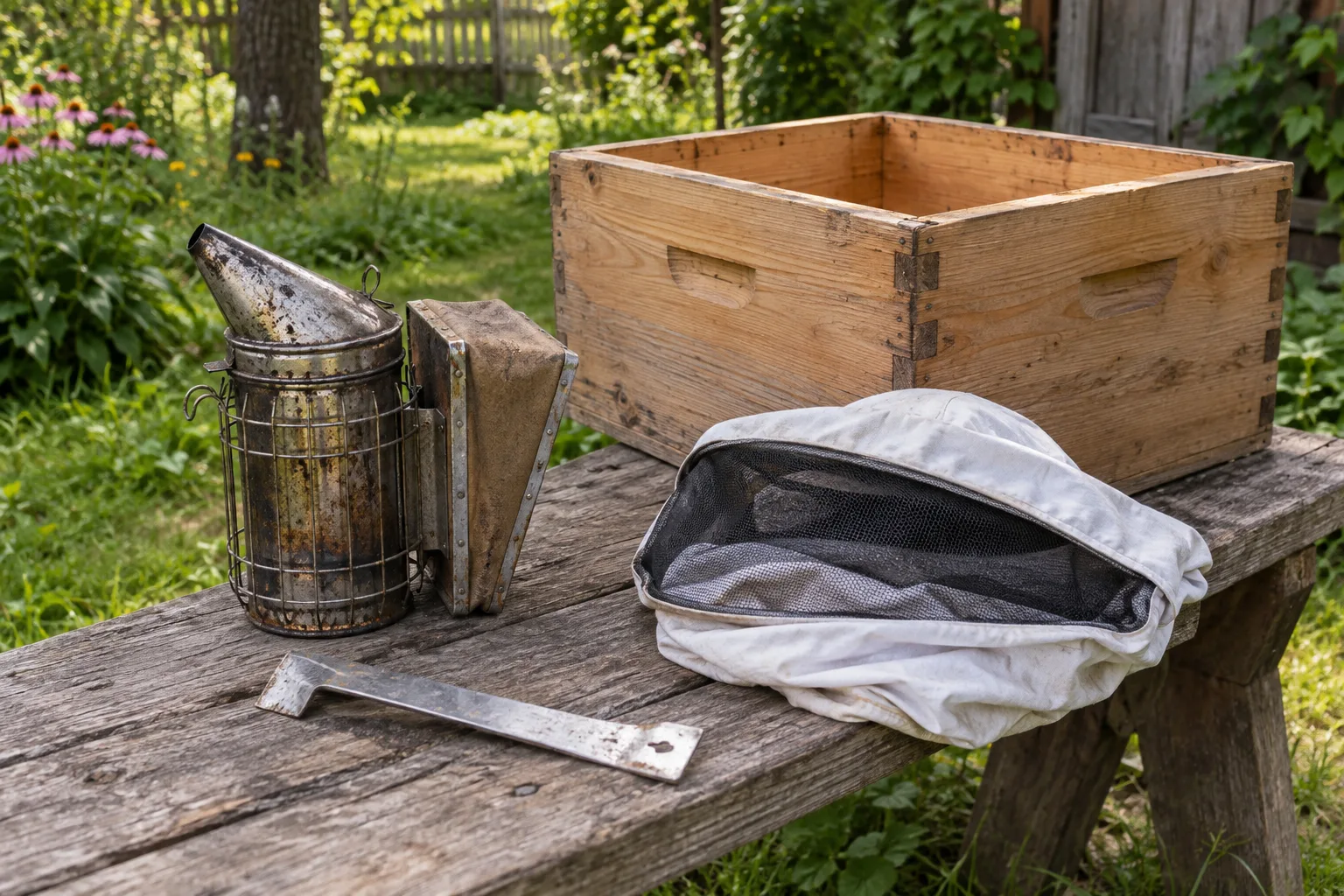
Learn locally before buying bees
Join a local association or an introductory course that includes supervised hive work. Handling frames, recognising brood and finding the right help for suspected disease are skills a short online guide cannot replace.
Beekeeping is animal husbandry, not a guaranteed pollinator-conservation project. If helping wild pollinators is your main goal, habitat and appropriate planting can be worthwhile without adding managed honey bee colonies.
Arrange a site and the practical obligations
Check permission to keep bees, local registration or reporting requirements and access to the site. Think about neighbours, paths, livestock, water and lifting heavy equipment—not only the direction of the entrance.
Visit the site after rain and in different conditions. A sunny photograph will not tell you whether you can safely carry boxes there throughout the season.
Buy compatible essentials
Choose a hive system supported by your local mentor and suppliers. Compatibility makes exchanging equipment and getting help much simpler than choosing a format because a website calls it universally best.
- A sound hive, frames, stand and appropriate feeding equipment.
- A well-fitting veil and protective clothing.
- A hive tool and a smoker, used only where fire restrictions permit.
- Spare equipment and a method for colony-health monitoring.
- A reliable place to record inspections and follow-up work.
Source bees with a known history
Ask a reputable supplier about health status, queen origin, frame format and the care needed after collection. Arrange installation with someone experienced rather than improvising from an internet recipe.
Two colonies can offer a useful comparison, but they also double parts of the responsibility. Start at a scale your time, site and support can sustain. Do not count on a first-year honey crop.
Start your logbook on arrival
Record the source, arrival date and hive identifier. Keep your initial observations and the supplier’s follow-up instructions together. In the first season, a clear record of what changed is often more valuable than an ambitious production target.
A paper notebook is valid. A mobile logbook such as ApiNote adds structured activities and hive-linked tasks; choose the system you will actually keep using.
Sources & further reading
ApiNote · iOS & Android
Good notes make the next visit easier.
Give every colony a history you can find again. ApiNote is available for iOS and Android, free for up to five hives.
Compare Free & ProKeep exploring
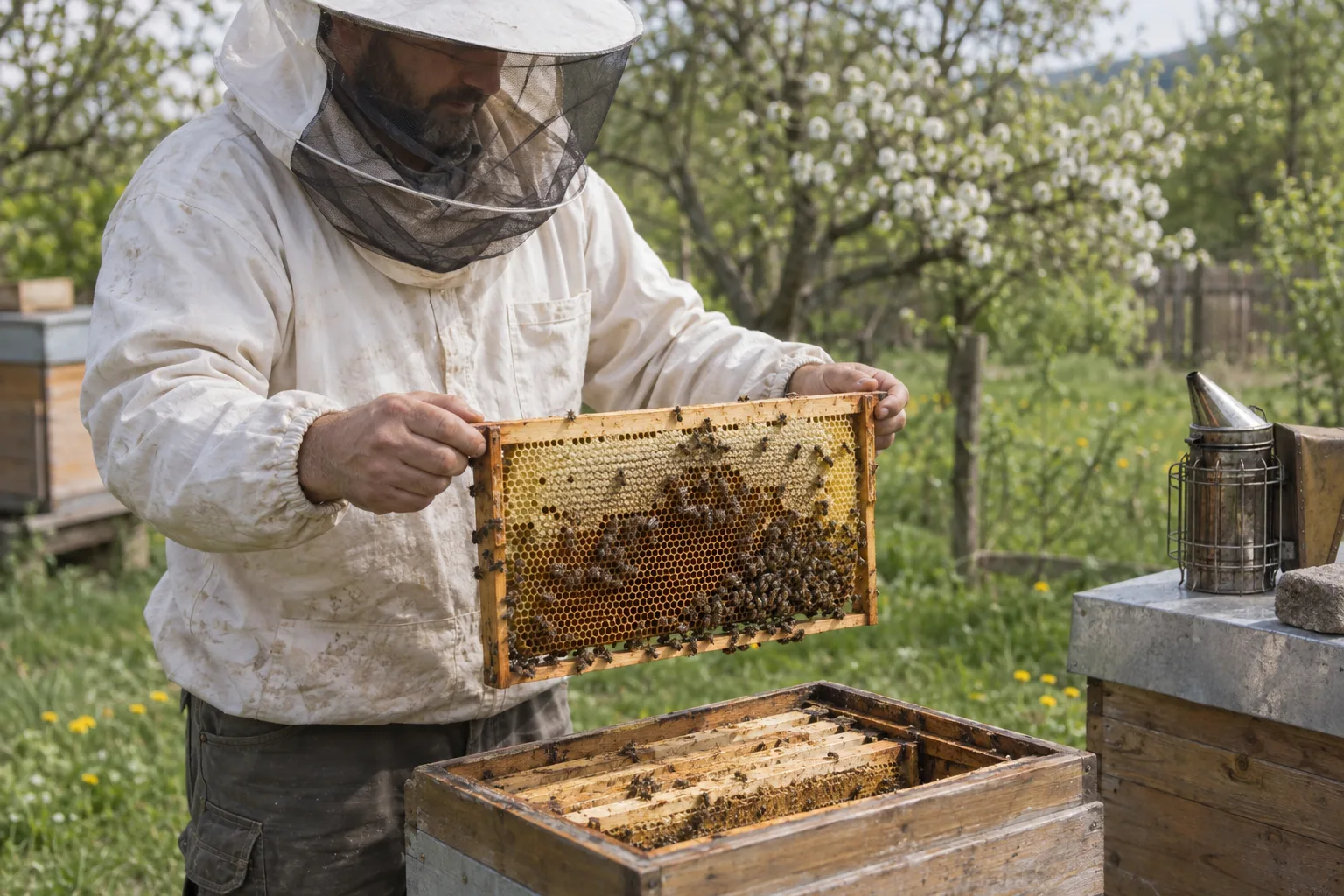
Common beekeeping mistakes—and a better habit for each
Avoid preventable confusion around inspections, feeding, queens, mite monitoring and honey harvests with practical habits for a new beekeeper.
Updated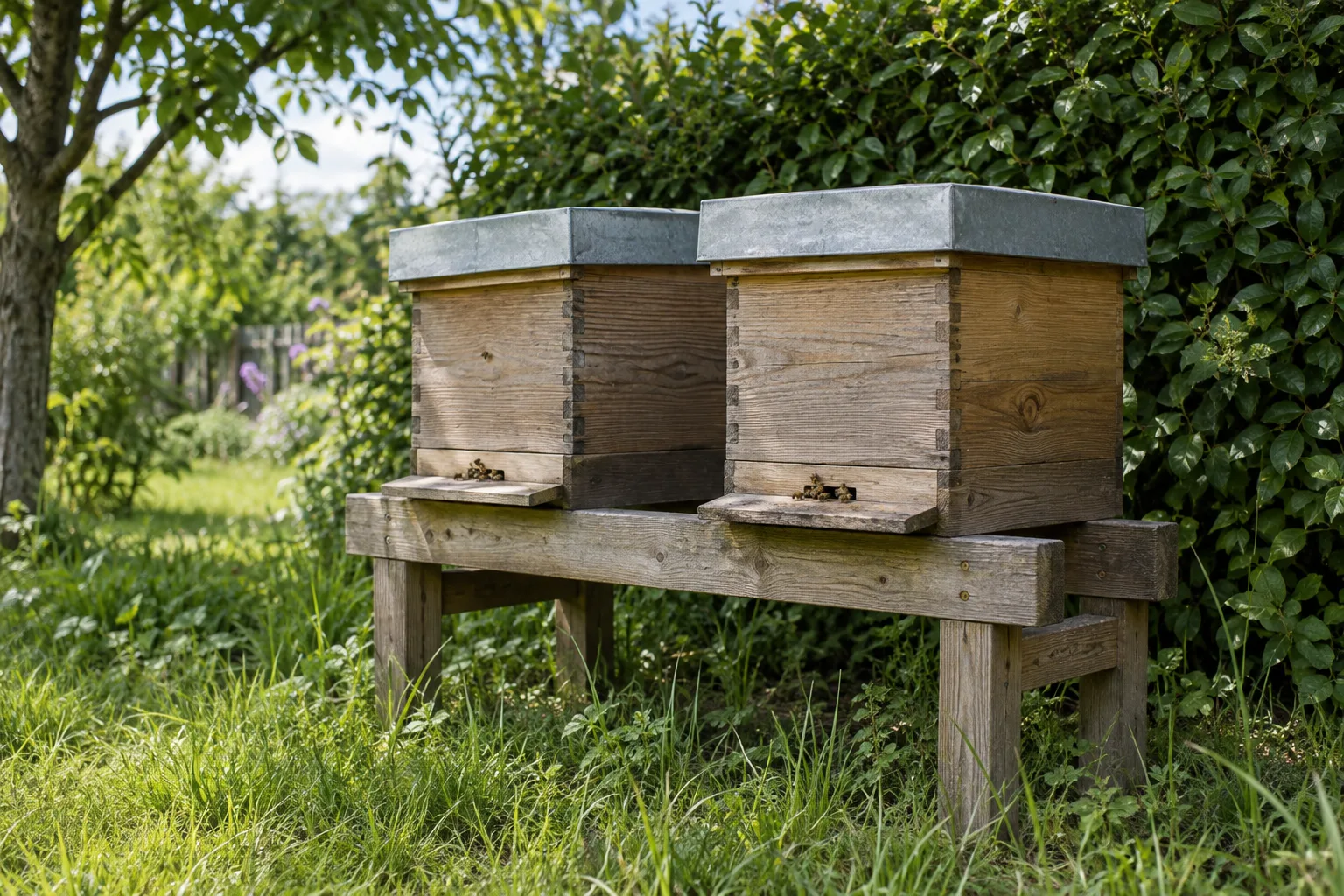
Choosing an apiary site: access, neighbours and forage
Assess an apiary location beyond the map pin: safe access, neighbours, water, shelter and seasonal forage, with practical notes to keep for future visits.
Updated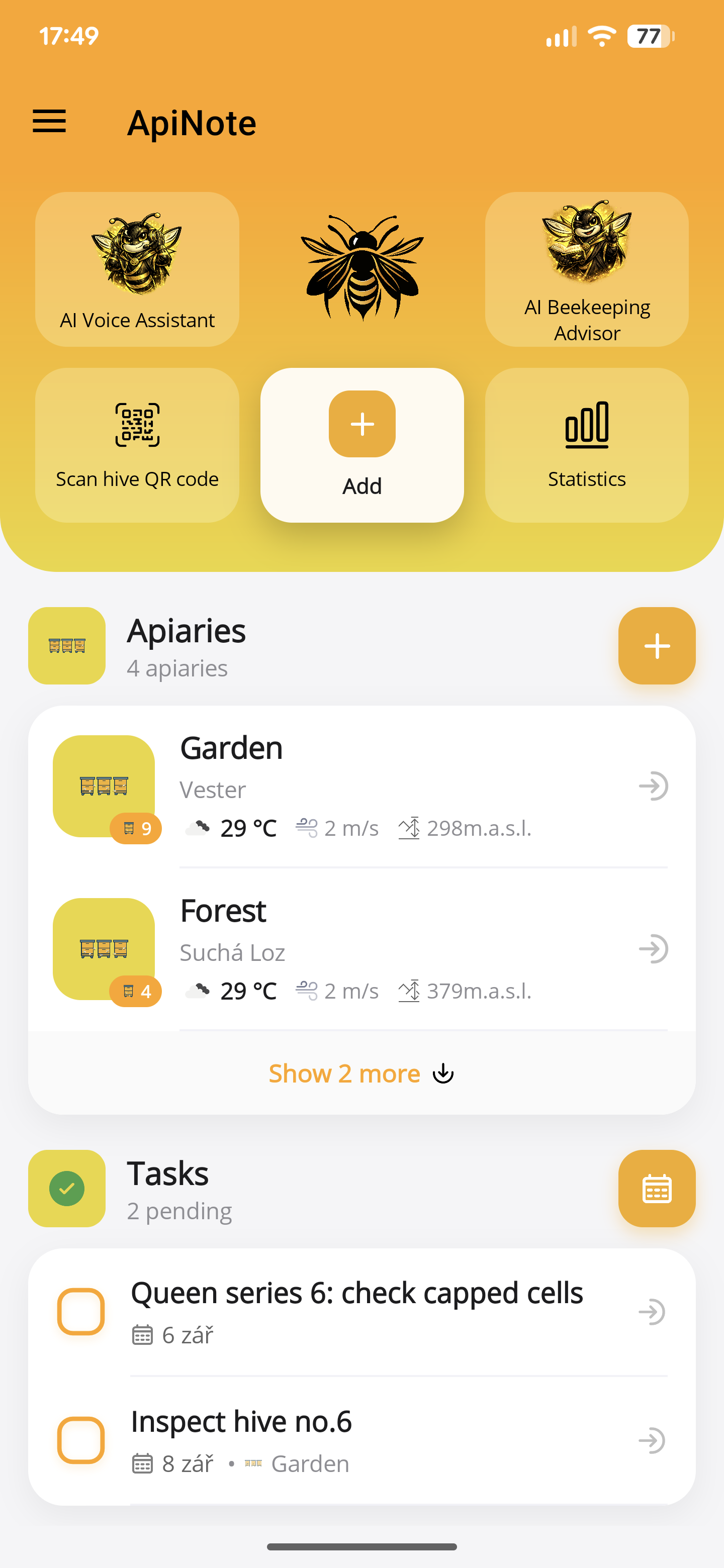
Your first apiary in ApiNote: a practical setup guide
Set up your apiary, add your first hives and save an inspection in ApiNote. A practical introduction to the free beekeeping app for iOS and Android.
Updated