Beekeeping practice
Common beekeeping mistakes—and a better habit for each
Most useful lessons in a first season are not secret techniques. They are habits: checking before acting, knowing what remains uncertain and leaving a record you can understand next week.
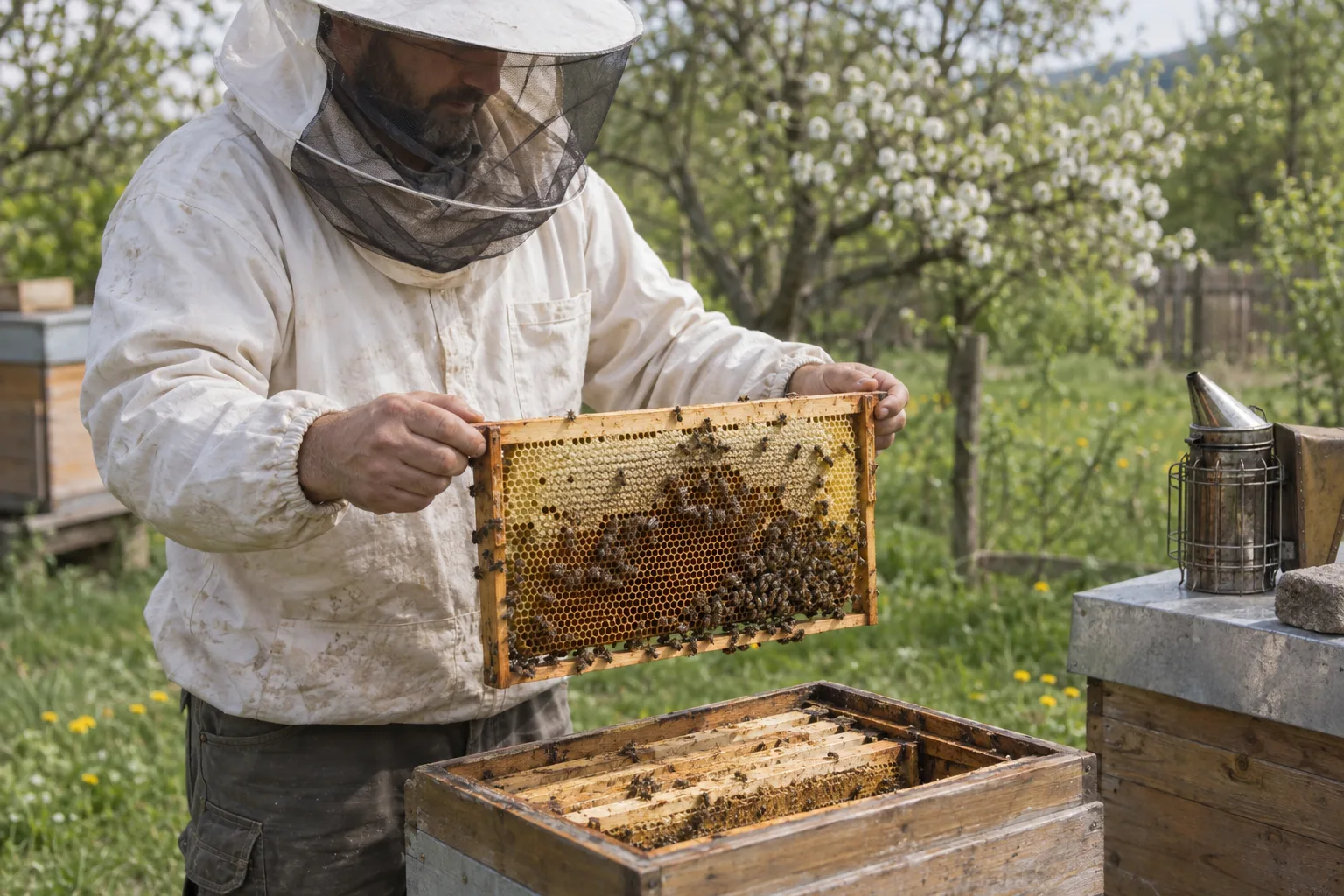
1. Inspecting without a purpose—or not inspecting at all
A visit should answer the questions that matter for that colony and season. Opening a hive repeatedly out of curiosity can be as unhelpful as forgetting it. Agree an appropriate inspection rhythm with a local mentor, including the shorter follow-up windows that some work requires.
Before opening, read the last note. Afterwards, record what you checked and what you did not.
2. Feeding by habit rather than need
Check stores and available forage before feeding. A colony can run short even when the calendar says spring; conversely, feeding a colony that has sufficient stores is not automatically beneficial.
Keep the amount and date of feed in the log. Keep feeding decisions separate from honey intended for harvest and follow local good practice.
3. Relying on appearance to judge mites or queen status
A busy entrance is not a mite count. Use a recognised monitoring method and get local guidance on interpreting the result. Record the method as well as the number.
Likewise, not seeing the queen does not establish that a colony is queenless. Record eggs, brood and other observations separately, and get help if the pattern is unclear.
4. Treating safety and equipment as an afterthought
Use appropriate protection even when familiar bees have been calm before. Inspect the veil for gaps and keep a safe exit from the working area.
Prepare compatible spare parts before the visit. Do not move used comb or equipment of uncertain health into another colony simply because it looks clean.
5. Taking a harvest target more seriously than the colony
There is no universal winter-store figure or harvest date for every hive format and climate. Check colony needs locally and leave sufficient accessible food.
Avoid comparing a new split with an established production colony without noting their different histories. A smaller crop is not automatically a management failure.
6. Remembering the job but losing the follow-up
“Fed hive” leaves important questions unanswered. Which hive, when, how much and what prompted it? Use stable identifiers and complete tasks only after the work is done.
If something goes wrong, preserve the observations and ask for help. A candid logbook is more useful than rewriting the story into an apparent success.
Sources & further reading
ApiNote · iOS & Android
Good notes make the next visit easier.
Give every colony a history you can find again. ApiNote is available for iOS and Android, free for up to five hives.
Compare Free & ProKeep exploring
A spring hive inspection checklist that follows the colony
Plan the first spring inspection around stores, brood, colony strength, space and follow-up work—not a fixed date or a promise of rapid growth.
Updated
Starting beekeeping: what to arrange before your first hive
A grounded beginner’s guide to beekeeping: training, apiary location, equipment, sourcing bees and keeping useful records through your first season.
UpdatedWhat to record in a beekeeping logbook
A practical hive record checklist: inspections, queens, feeding, treatments, mite counts and harvests, with clear next actions for your next apiary visit.
Updated