Beekeeping practice
Storing drawn comb: freezing is only the first step
You open a stored super expecting usable comb and find silk stretched between the frames. The frustrating part: the comb looked fine when you packed it away. Protecting drawn comb takes more than a trip through the freezer. What you keep, what you put it back into and when you check it all matter.
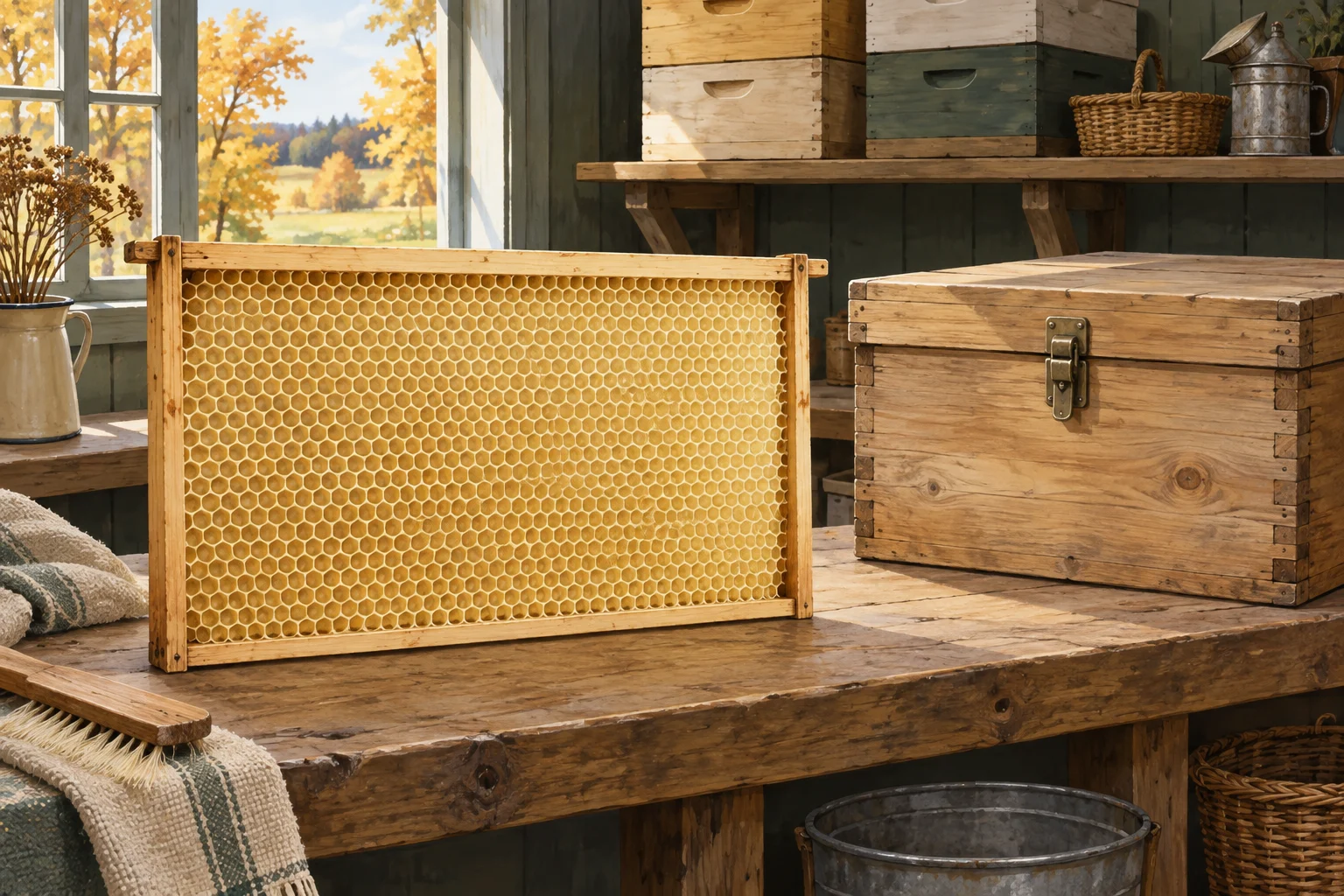
1. Sort the frames before choosing a storage method
This guide concerns empty drawn comb kept for reuse, not packaged comb honey. In temperate Europe, the end of the main harvest is a useful time to sort it. Elsewhere, work from your local season and storage conditions.
The University of Florida explains that wax moth larvae favour comb containing brood remains and pollen. Light honey comb is a different storage proposition from dark, previously brooded frames, but it is not immune. Separate those groups so the most vulnerable material does not disappear into an unlabelled stack.
North Carolina State Extension recommends removing old, dark comb as part of equipment maintenance. Do that assessment before investing storage space in frames you already intend to replace. Check the wooden parts too: larvae can damage them as well as the wax.
- Keep sound frames with a known colony history together and identify their source.
- Set aside frames needing repair, planned replacement or closer examination.
- Do not mix visibly infested frames into the batch you are preparing for storage.
2. Treat “looks clean” as an observation, not a guarantee
Agriculture Victoria warns that apparently undamaged comb can already contain wax moth eggs. It also describes moths laying eggs around the outside joints of stacked supers, with tiny larvae finding a route inside.
That explains two common disappointments: bagging comb can enclose an existing problem, and freezing comb can be followed by a new infestation. The two operations have different jobs. Freezing addresses pests already present; effective exclusion protects the material afterwards.
3. Plan the whole freezer load, not just the clock
The UK National Bee Unit’s September 2026 wax moth factsheet describes putting frames into securely closed bags and using a domestic freezer for 24 hours to kill all wax moth life stages. Read the complete method linked below before starting.
Temperature exposure needs to apply to the material itself. Agriculture Victoria’s guidance explicitly starts its treatment times only once the hive material has reached the required temperature. A freezer setting is not proof that a densely packed load is already cold throughout.
Plan manageable batches and use a published method suited to your equipment. If you cannot establish that the whole load receives the specified exposure, get local advice rather than assuming that a short chill has done the job. A cool shed is useful storage, but it is not a verified freezing treatment.
4. Give frozen comb a protected destination
Have the storage arrangement ready before taking the batch out. Agriculture Victoria recommends strong plastic bags that prevent moth access and warns that an untreated super can carry eggs back to treated frames. Where the equipment allows it, its guidance is to freeze the super and comb together before enclosing them.
A stack with a lid may look tidy without being moth-proof. Inspect the enclosure, closures and joints rather than judging protection from the outside appearance. Keep the batch identity visible so opening one stack does not become a search through every box.
5. Do not use one winter-storage rule for every frame
Airy, well-lit storage is sometimes proposed as an alternative to enclosed storage. The University of Florida says light and ventilation can discourage lesser wax moths, but specifically warns against relying on this method for dark brood comb. Its guidance also distinguishes cool conditions that slow activity from conditions that kill the pest.
The National Bee Unit likewise limits its ventilated outdoor method: it is unsuitable for old, dark comb and frames containing pollen, and stored material still needs checking during warm winter weather.
For a beekeeper in Central Europe, “it will soon be winter” is therefore an incomplete plan. Consider the actual store, the type of comb and periods of mild weather. In warmer regions, a winter label is an even poorer substitute for those observations.
6. Put the next check on the calendar before you finish
Look for fresh silk galleries, larvae, debris and cocoons when inspecting stored frames. The National Bee Unit illustrates these signs. If you find activity, separate the affected material and review its guidance before deciding what can be retained.
North Carolina State also highlights mice as a storage threat and warns that ordinary naphthalene mothballs harm honey bees. Keep household moth-control products out of this plan; a product sold for clothes is not a comb-storage method.
Make a short batch record that you can actually use. For example: “Batch A — north apiary; eight light super frames; freezing completed 25 September; sealed store, shelf 2; next check entered.” This is an illustrative label, not a treatment log template or evidence that a particular batch is clear.
Record the method and actual start and finish separately. At the next check, note both the comb’s condition and whether the enclosure is intact. Choose the interval using local guidance and the conditions in your store; warm conditions or a damaged enclosure warrant reassessment.
ApiNote lets you create a dated task for an apiary or for general work, with an optional phone reminder. A task such as “Inspect stored comb, batch A” gives this job a place in your calendar. Keep the batch label with the equipment, then update the task after checking it. Phone alerts depend on notification permission.
Sources & further reading
- National Bee Unit — Wax moth (September 2026 factsheet)
- Agriculture Victoria — Wax moth, a beekeeping pest: freezing and preventing reinfestation
- University of Florida IFAS — Lesser wax moth: food preferences and stored-comb protection
- NC State Extension — Wax Moth Control in Stored Equipment (July 2026)
- ApiNote — Tasks and reminders
ApiNote · iOS & Android
Good notes make the next visit easier.
Give every colony a history you can find again. ApiNote is available for iOS and Android, free for up to five hives.
Compare Free & ProKeep exploring
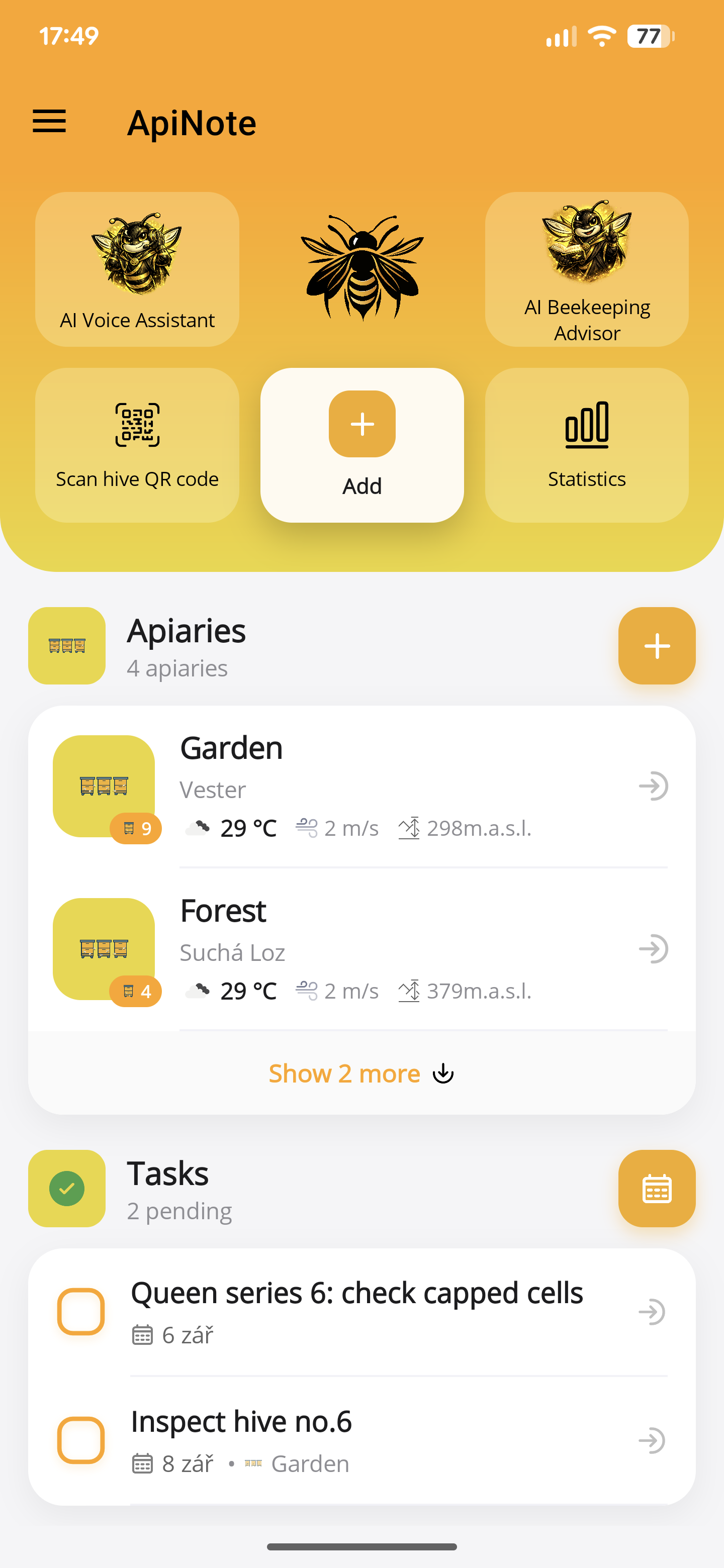
How to create a hive task and reminder in ApiNote
Turn a follow-up check into an ApiNote task. Choose the hive, set a date and optional phone reminder, then mark the work complete in your calendar.
Updated
Plan a honey harvest without losing the colony’s context
Connect forage, colony strength, harvest readiness and the records behind each crop. A grounded alternative to guaranteed honey-production hacks.
Updated
DIY apiary improvements: save effort without cutting safety
Practical low-cost apiary improvements, from clear hive labels to spare-parts organisation. Know where improvised feeders, chemicals and used comb need caution.
Updated