Beekeeping practice
Why honey turns grainy: a guide to crystallization
The jar poured easily a few weeks ago. Now the honey clings to the spoon in pale, grainy folds. Before you throw it away—or tell a customer that the crystals prove it is pure—separate three questions: what changed in its texture, whether it shows signs of spoilage, and what you actually know about its origin.
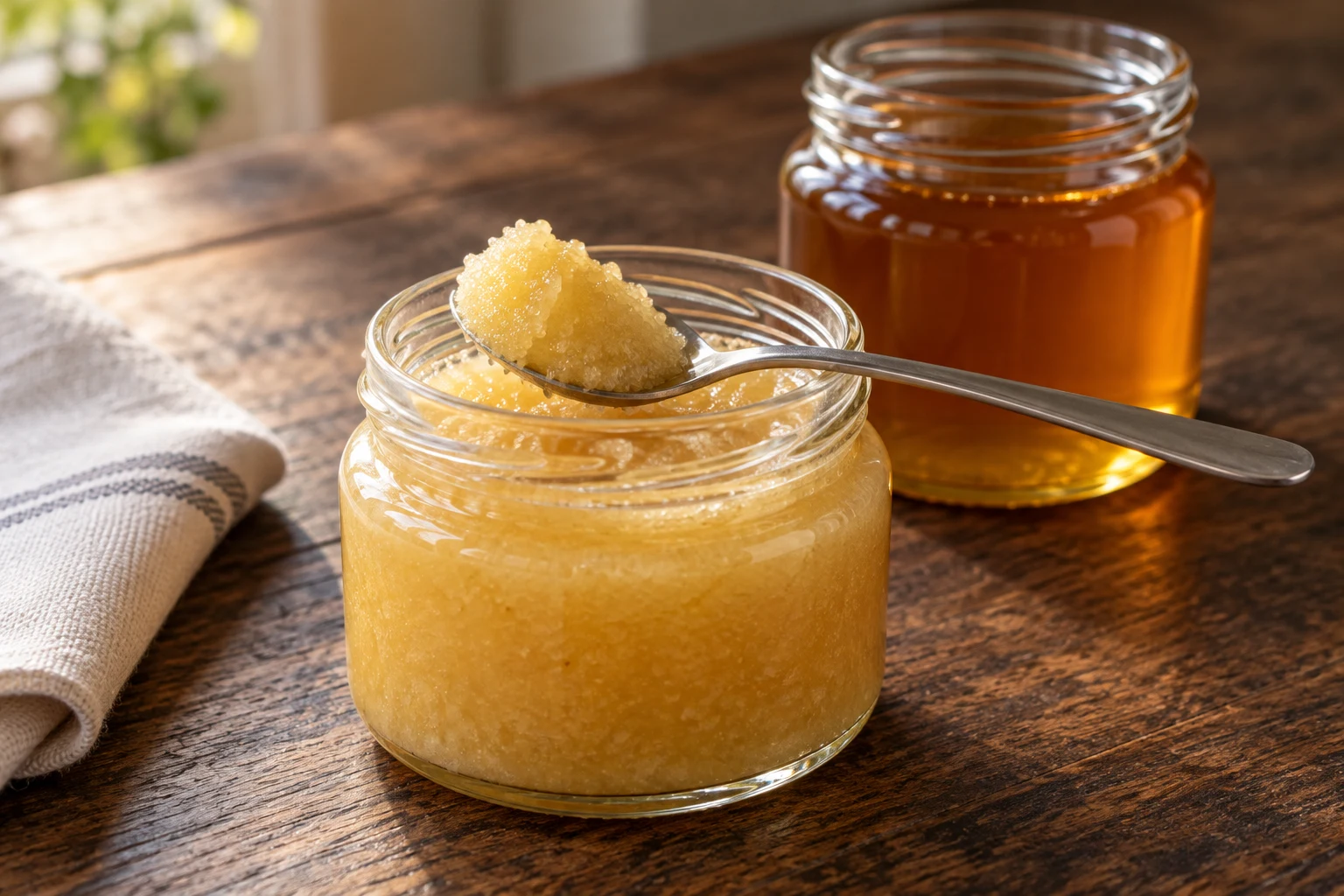
Those grains come from sugars already in the honey
Honey contains dissolved sugars. During crystallization, some of its glucose forms solid crystals within the liquid. No added spoonful of table sugar is needed for this to happen. The National Honey Board explains that different honey varieties crystallize at different rates; comparing two jars on a shelf is therefore a poor way to judge them.
Composition matters. In a University of Reading study, crystal growth at 14°C increased with the honey's total glucose content. That is an experimental finding about samples under defined conditions, not a timetable for every jar. A change in texture cannot tell you the exact floral source or the harvest date.
Neither a clear jar nor a set jar proves purity
The popular water, flame and crystallization tests are not reliable checks for adulteration. The National Honey Board explicitly rejects these home tests. A jar remaining liquid is not, by itself, evidence of added syrup; crystallization does not certify authenticity either.
The UK's Food Standards Agency describes authentication as a specialist analytical problem, with no single method sufficient to detect every type of syrup adulteration. Its recent research investigated spectroscopy and DNA markers—not the appearance of a teaspoonful. For a serious authenticity concern, use traceability information and advice from an appropriate testing laboratory.
Graininess and fermentation are different observations
Crystallization alone does not make honey unsafe. Moisture is a separate issue: Penn State Extension explains that water entering honey can create conditions that allow yeasts and moulds to grow. It advises discarding honey that foams and smells alcoholic. Do not try to rescue such a jar by warming it.
These are useful distinctions, not a complete safety test by sight or smell. The advice here concerns ordinary honey, not honey mixed with fruit, garlic or other ingredients. As Purdue Extension reminds readers, honey must not be given to children under one year old, whether liquid or crystallized.
You may prefer it just as it is
If the only change is crystallization, there is no need to make the whole jar runny again. Try a small amount on toast or stir it into warm porridge. Choose the texture that suits how you use it.
Fine crystals are also the basis of deliberately made creamed honey. Purdue Extension describes a controlled crystallization process that produces a smooth, spreadable texture. A jar that sets naturally may feel coarser; that does not mean it has become a different ingredient.
Want it pourable? Use a gentle water bath
Purdue's household method is to heat water in a pan, remove the pan from the heat, then stand the honey jar in the water and stir until the crystals dissolve. Penn State likewise specifies hot, not boiling, water. Use a container suitable for warming and avoid sudden temperature changes that could crack glass.
- Keep the jar opening above the water so the honey is not diluted. Stir with a clean, dry spoon.
- Be patient. Do not put the honey jar over a direct flame or boil the honey to hurry it along.
- Warm only the amount you need. This restores a useful texture; it is not a preservation treatment or a guarantee that the honey will stay liquid.
Give the jar a dry home—and the customer a clear answer
Store honey in a tightly closed, food-grade container, away from direct sunlight and strong smells. Utah State Extension recommends moisture- and odour-resistant packaging and notes that heat can darken honey and change its flavour. A cupboard away from the cooker is a more sensible home than a sunny windowsill.
For a beekeeper, a short explanation can prevent an unnecessary complaint: “Honey can form sugar crystals naturally. You can use it set, or soften it gently in a water bath.” Present that as storage advice, without turning texture into a promise of purity.
Keep your supporting records specific. ApiNote can hold harvest dates and quantities against the relevant hive, and its statistics help review those entries. Keep any jar-batch, handling and laboratory documentation linked to your harvest records in your own record system. An app entry supports an explanation; it does not authenticate a jar.
Sources & further reading
- National Honey Board — Why common home tests cannot establish honey purity
- Al-Habsi, Davis & Niranjan, University of Reading — Glucose crystals and honey setting (research abstract)
- Food Standards Agency — Developing a new testing methodology for honey authentication (2025)
- Penn State Extension — Honey storage, spoilage and warming (honey question)
- Purdue Extension FoodLink — Honey forms, crystallization and kitchen handling
- Utah State University Extension — Storing sugars and honey
ApiNote · iOS & Android
Good notes make the next visit easier.
Give every colony a history you can find again. ApiNote is available for iOS and Android, free for up to five hives.
Compare Free & ProKeep exploring
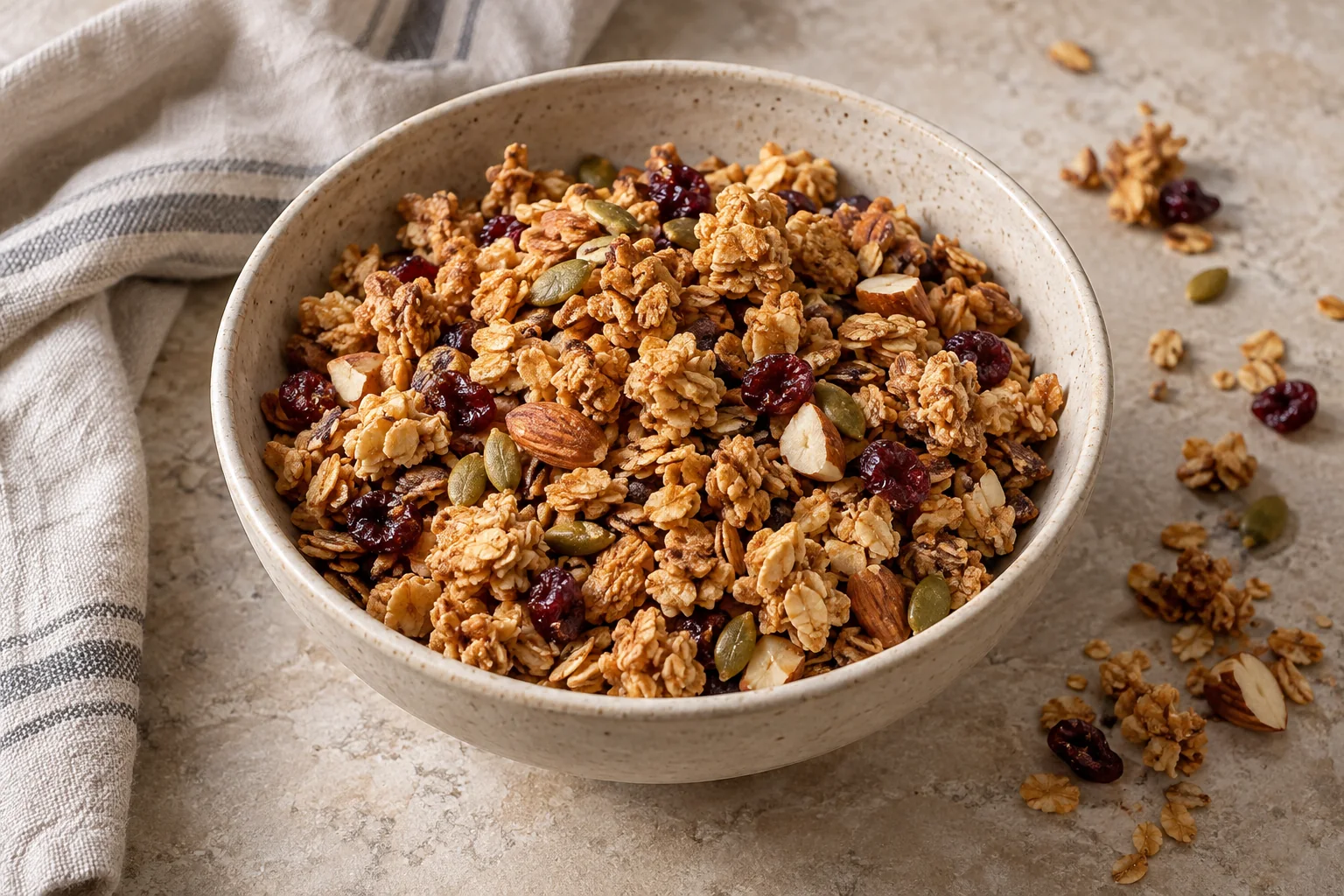
Crunchy honey almond granola
Golden oat clusters with honey, almonds, pumpkin seeds and dried cranberries. A simple tray-baked granola with the cooling step that makes it crisp.
Updated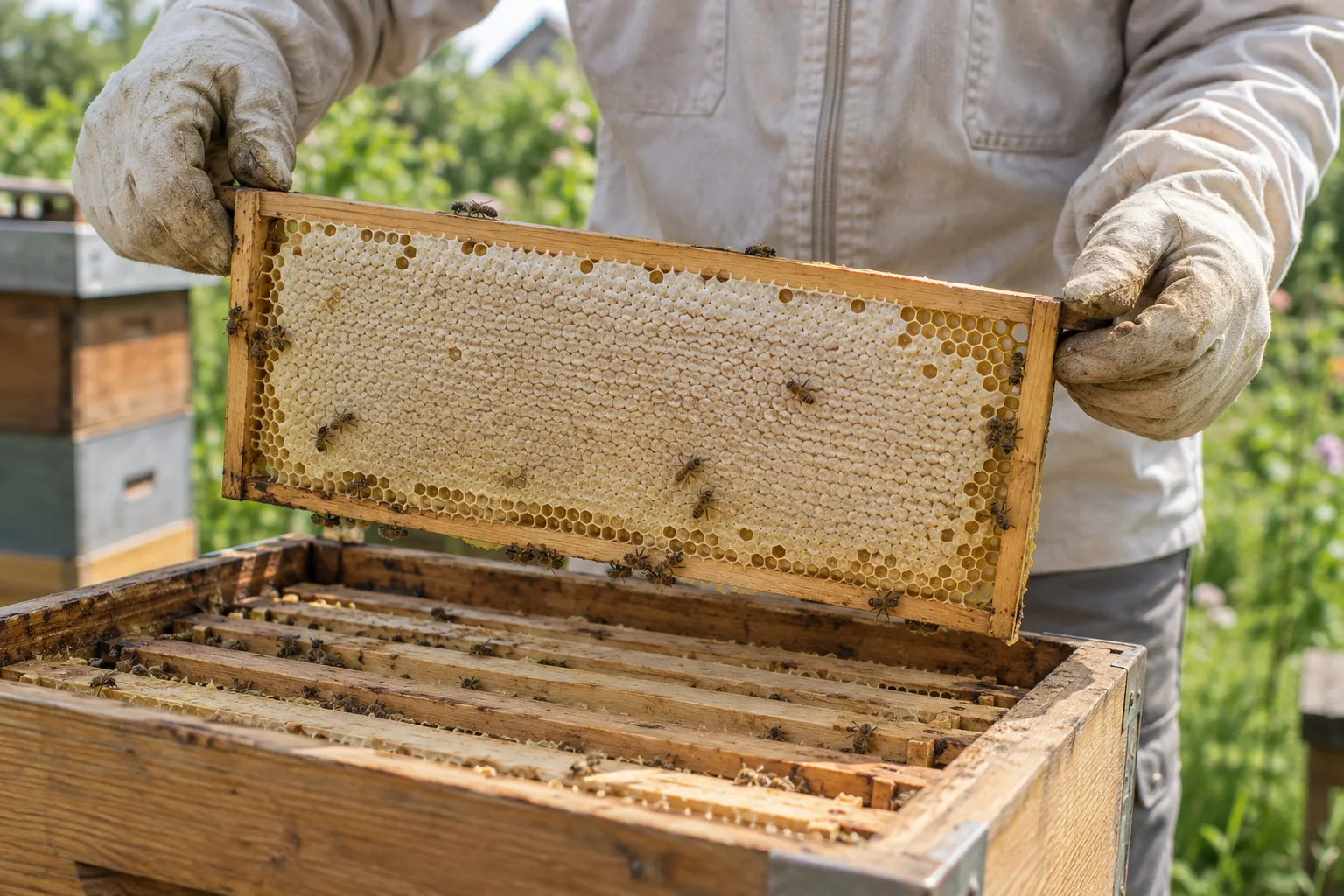
Plan a honey harvest without losing the colony’s context
Connect forage, colony strength, harvest readiness and the records behind each crop. A grounded alternative to guaranteed honey-production hacks.
Updated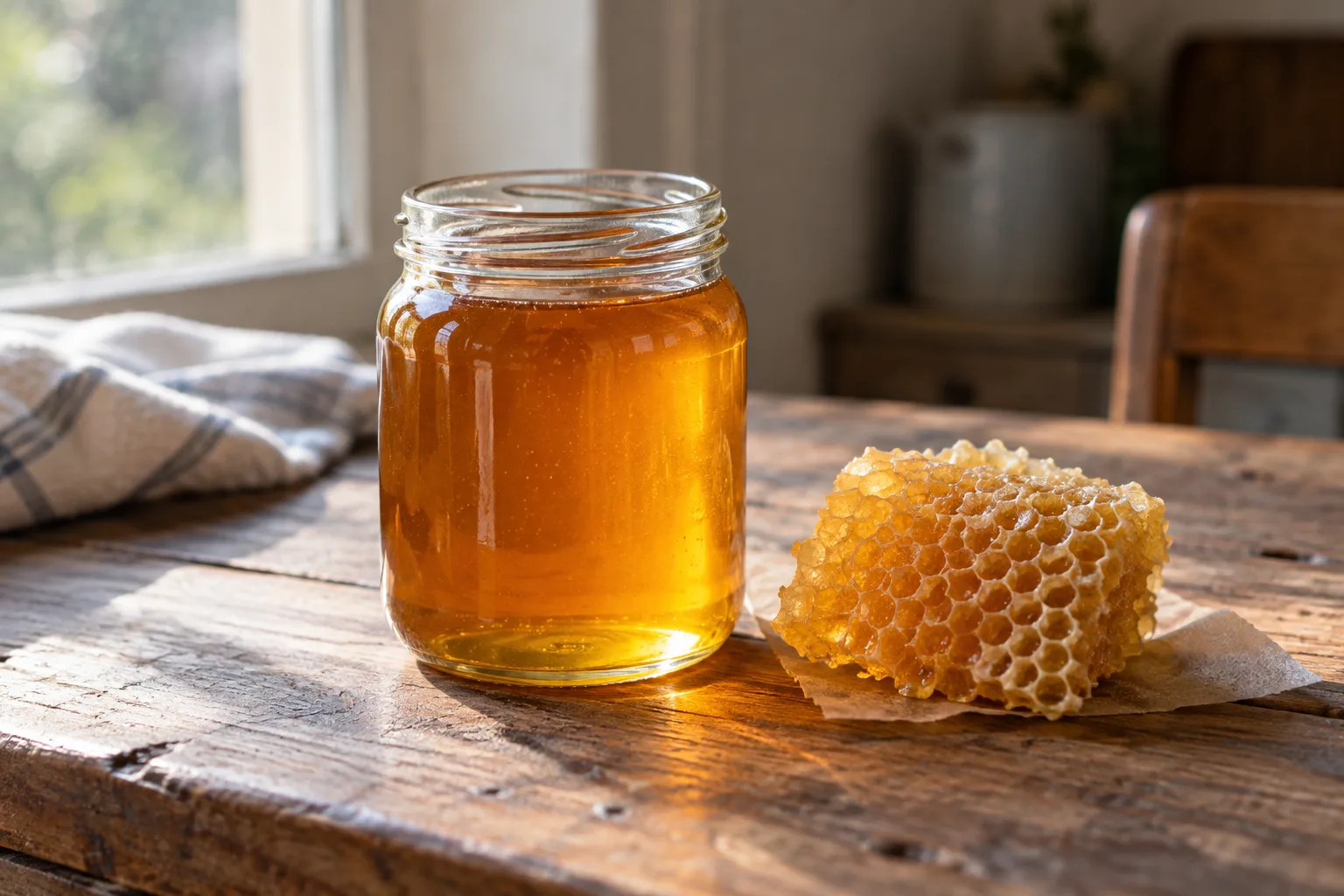
Raw honey: enjoy the flavour, be careful with health claims
A practical note on raw honey, honest product descriptions and safe use. Why a jar of honey should not be marketed as a cure or given to infants under 12 months.
Updated