Beekeeping practice
Why winter bees live longer than summer bees
A colony can remain alive through months when it is producing few new workers. How does it avoid simply running out of bees? In temperate climates, part of the answer is a population of longer-lived workers. Understanding these winter bees is more useful than assuming every bee that emerges after a particular date will survive until spring.
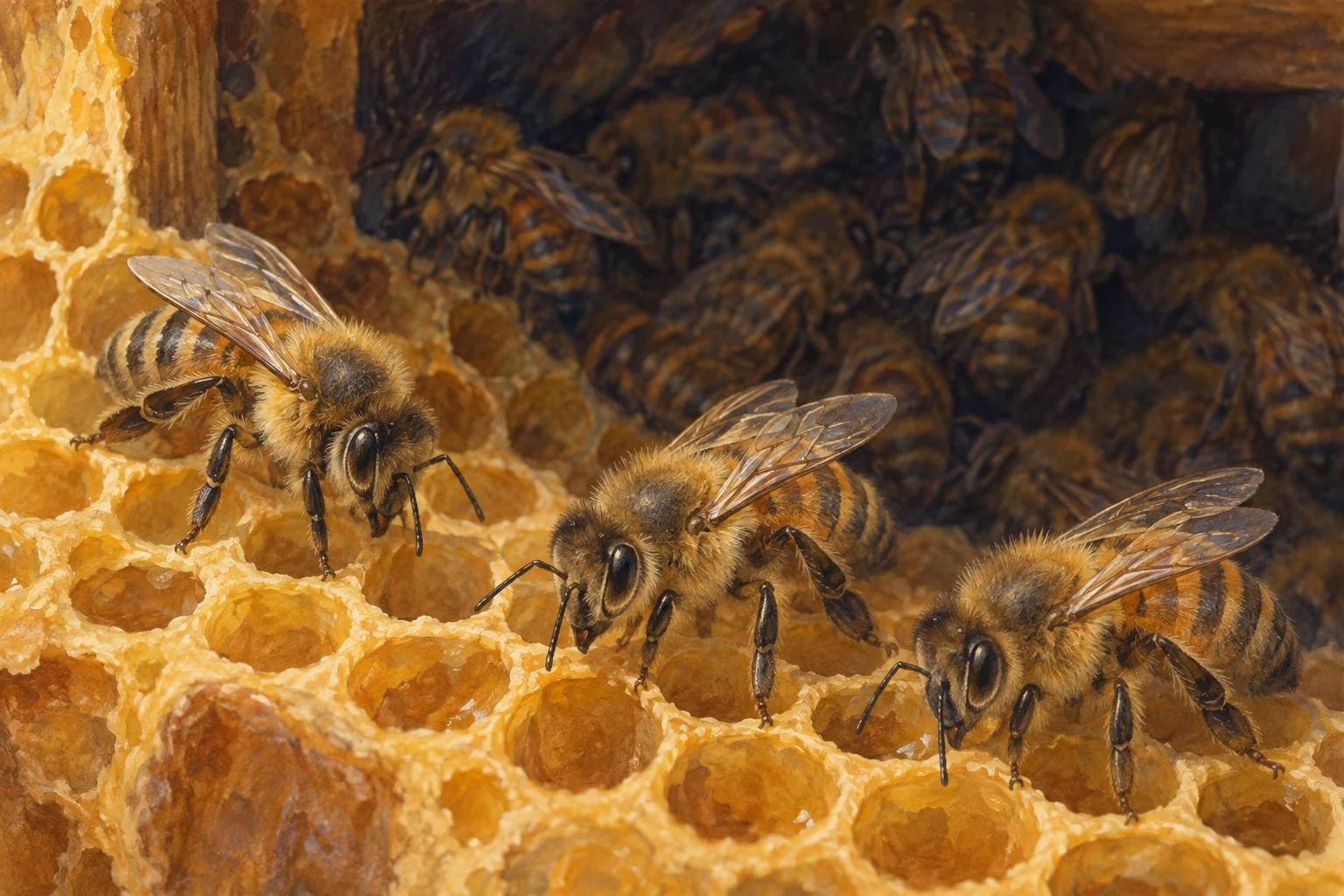
A longer-lived worker, not a different species
“Winter bee” describes a long-lived physiological state of a worker honey bee. Researchers also use the term diutinus. Summer workers commonly live for weeks; long-lived workers can persist for months. These are broad patterns, not a lifespan guarantee for an individual bee.
The difference involves what is happening inside the bee and the work demanded by the colony. A photograph of workers on comb cannot tell you their future lifespan. Nor does a busy entrance prove that a colony has the population it needs for the coming winter.
Raising brood changes the demands on a bee
In a controlled experiment reported by Amdam and colleagues in 2009, sister workers experienced different amounts of brood care early in life, then shared the same later foraging environment. Bees exposed to less brood rearing had higher levels of the protein vitellogenin, began foraging later and lived longer.
That matters because it separates some of the effects of nursing from simply having fewer opportunities to fly. The authors found that the timing of the move into foraging explained much of the longevity difference, with an additional effect of brood-rearing experience. Winter longevity is therefore more than a bee being kept indoors by cold weather.
The colony stores resources in comb—and in bees
Honey in the comb is only part of the colony’s nutritional story. Long-lived workers also retain nutrients in their bodies. Vitellogenin is a storage protein involved in this physiology; it also supplies material used in the food that nurse bees produce for brood.
Ricigliano and colleagues’ 2018 study in southern California tracked colony condition and molecular measures through the autumn and winter. Reduced brood rearing and increasing vitellogenin gene expression in nurse bees were consistent with the production of diutinus workers, even in that warm setting.
For a beekeeper, this supports a useful distinction: stored honey and the condition of the adult population are different parts of winter readiness. A heavy hive does not, by itself, measure the nutritional state or likely longevity of its workers.
Cold is not the whole explanation
A 2020 experiment by Feliciano-Cardona and colleagues found winter-like longevity in a tropical honey bee population in Puerto Rico. Workers lived longer during seasonal forage scarcity, and experimentally reducing open brood also increased longevity. A freezing winter was not required for the response.
This was a study of a particular population and experimental conditions, not a recipe for making winter bees by removing brood. Its practical lesson is that colony workload and resources belong in the explanation alongside climate.
Regional context matters. In the southern California study, surviving colonies continued to have brood during winter. Do not transfer a broodless-winter assumption from a colder region to a mild-climate apiary—or label every October colony broodless because the calendar says autumn.
Keep observations that you can actually compare
Our practical interpretation is to record the colony’s changing circumstances, rather than trying to certify individual bees as “winter bees”. When an inspection is otherwise justified and conditions are suitable, keep a consistent account of what you checked. Review existing notes before deciding that another opening is needed.
- Brood: distinguish eggs, open brood and capped brood; note the extent actually observed and the date.
- Population: use the same description or estimation method between visits, and state any limits to the comparison.
- Resources: separate stored food observations from incoming forage and from feed you supplied.
- Context: retain the hive identifier, local conditions and any unresolved concern. Write “not checked” when that is what happened.
Write a record, not a survival prediction
For example: “Hive 4, 13 October: brood not checked; entrance observation only; pollen arriving during the afternoon.” This invented note is deliberately modest. It preserves an observation without turning it into proof of broodlessness, winter-bee numbers or colony health.
ApiNote keeps inspections, feedings and other activities with the relevant hive. Put the observation in the appropriate record and keep a follow-up task for work still to do. When spring comes, compare the outcome with those dated notes rather than relying on an autumn label.
Sources & further reading
ApiNote · iOS & Android
Good notes make the next visit easier.
Give every colony a history you can find again. ApiNote is available for iOS and Android, free for up to five hives.
Compare Free & ProKeep exploring
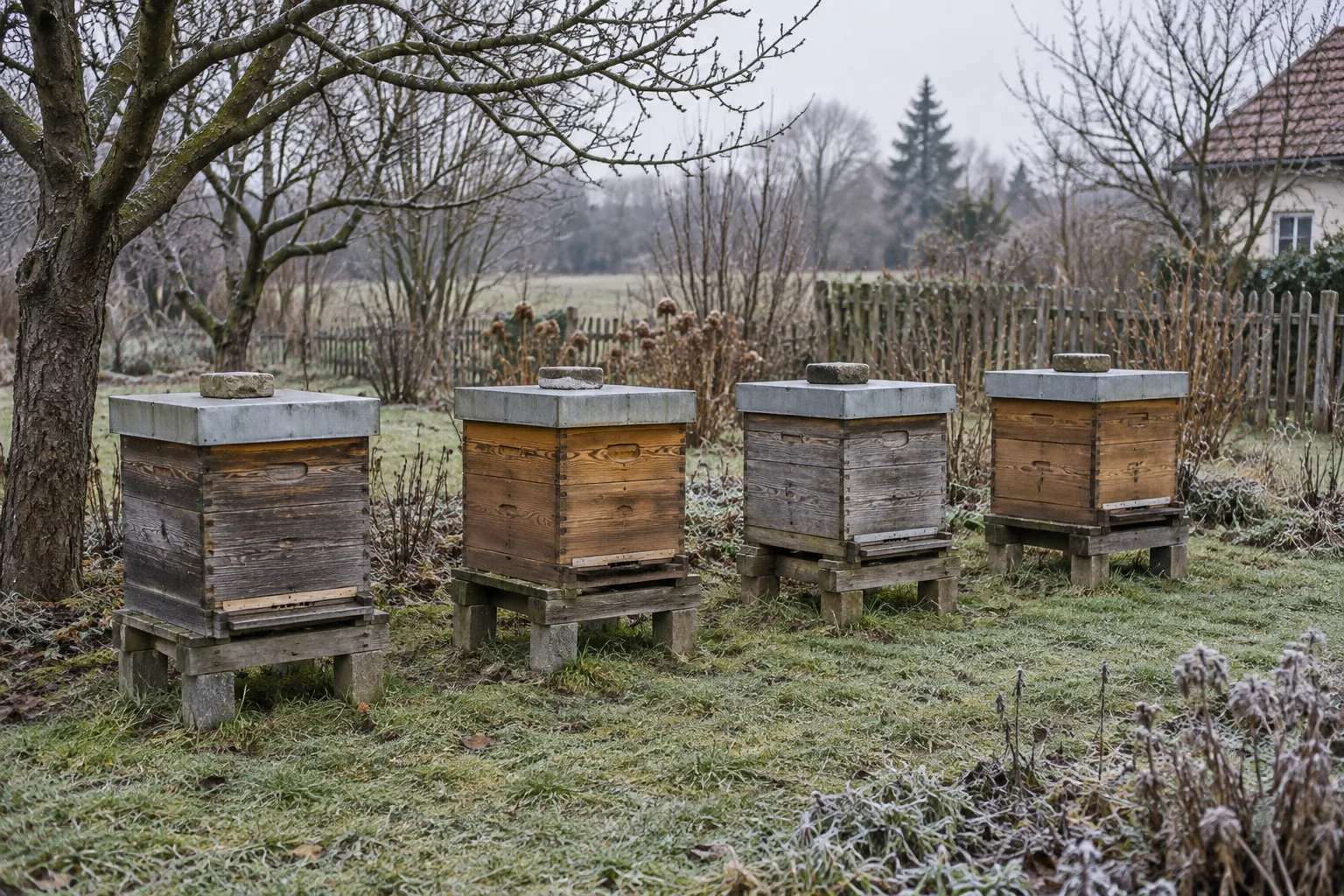
Preparing bees for winter: a colony-by-colony checklist
Review stores, colony condition, varroa follow-up and hive protection before winter. A practical checklist that avoids one-size-fits-all dates and feed targets.
Updated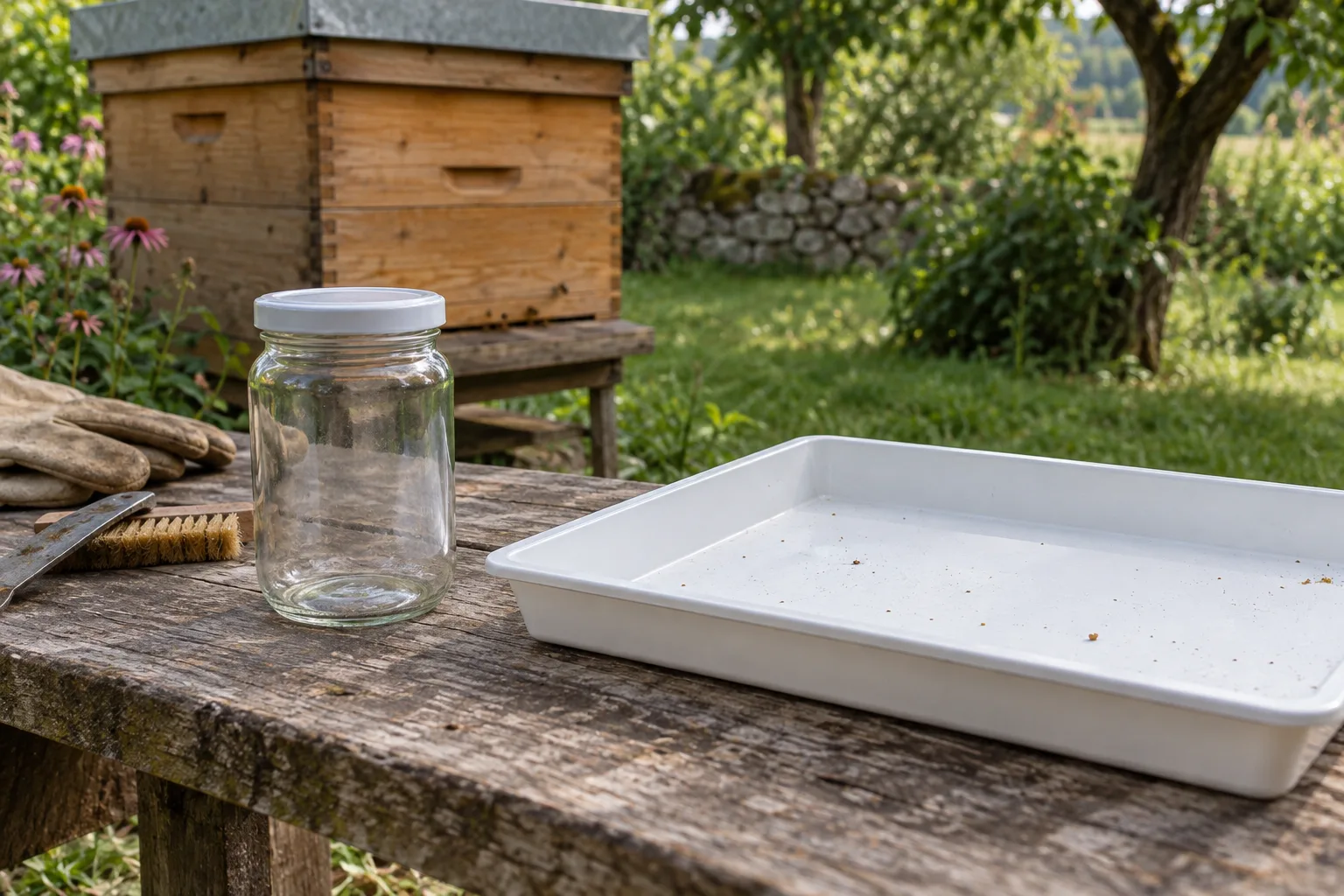
Varroa management: monitor, act and check the result
Build a traceable varroa management record: sampling method, mite result, locally appropriate action and follow-up. No universal treatment calendar or dose.
Updated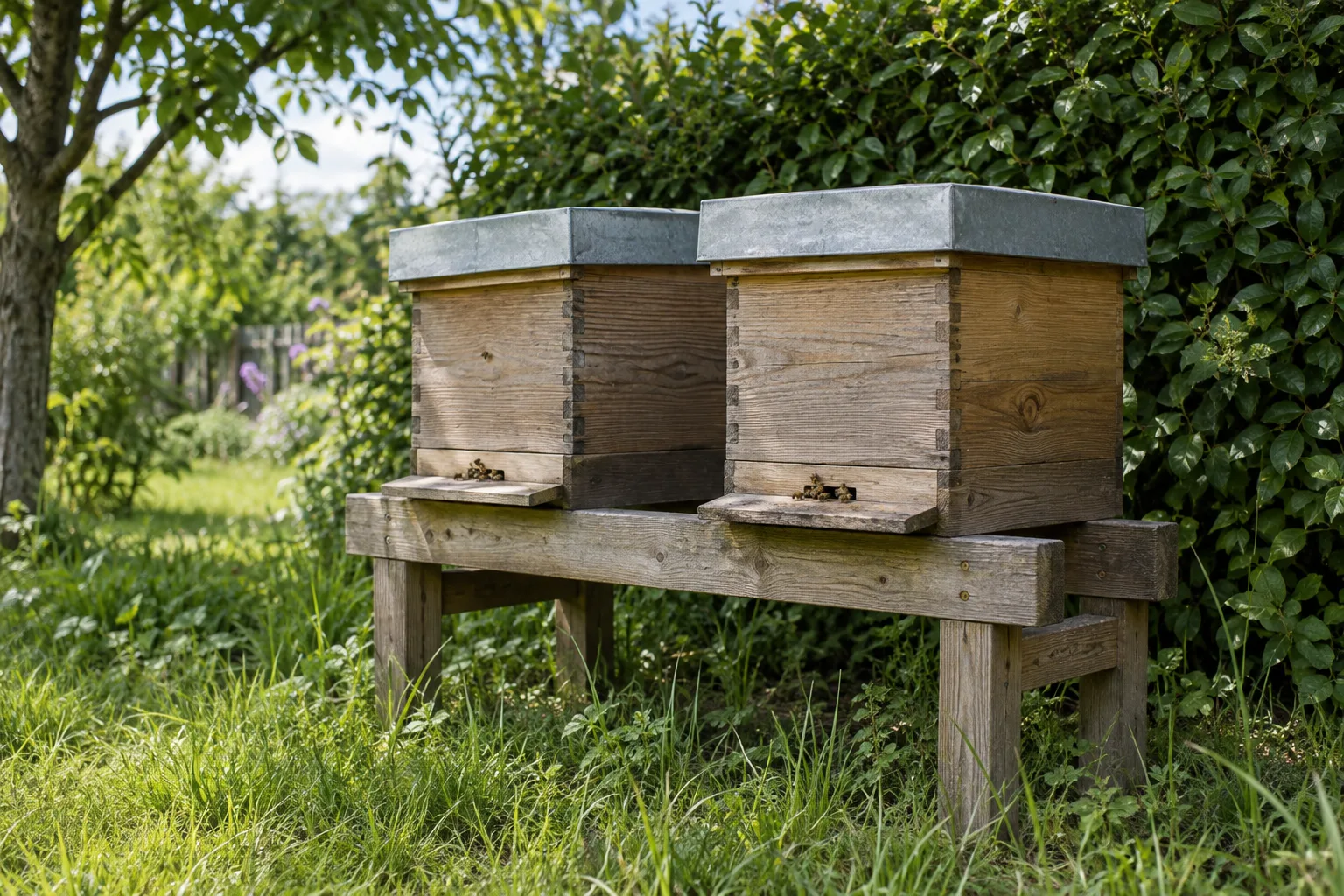
Overwintering nucs: plan for a small colony’s needs
A planning guide for overwintering nucleus colonies: queen and population checks, stores, mite monitoring, protection and realistic spring follow-up.
Updated