Beekeeping practice
Capped honey still needs a moisture check
A frame covered in pale wax cappings looks reassuring. But the question before bottling is more precise: what is the water content of the honey you are about to put into jars? A refractometer can help answer it—provided you check the instrument, the sample and the record behind the number.
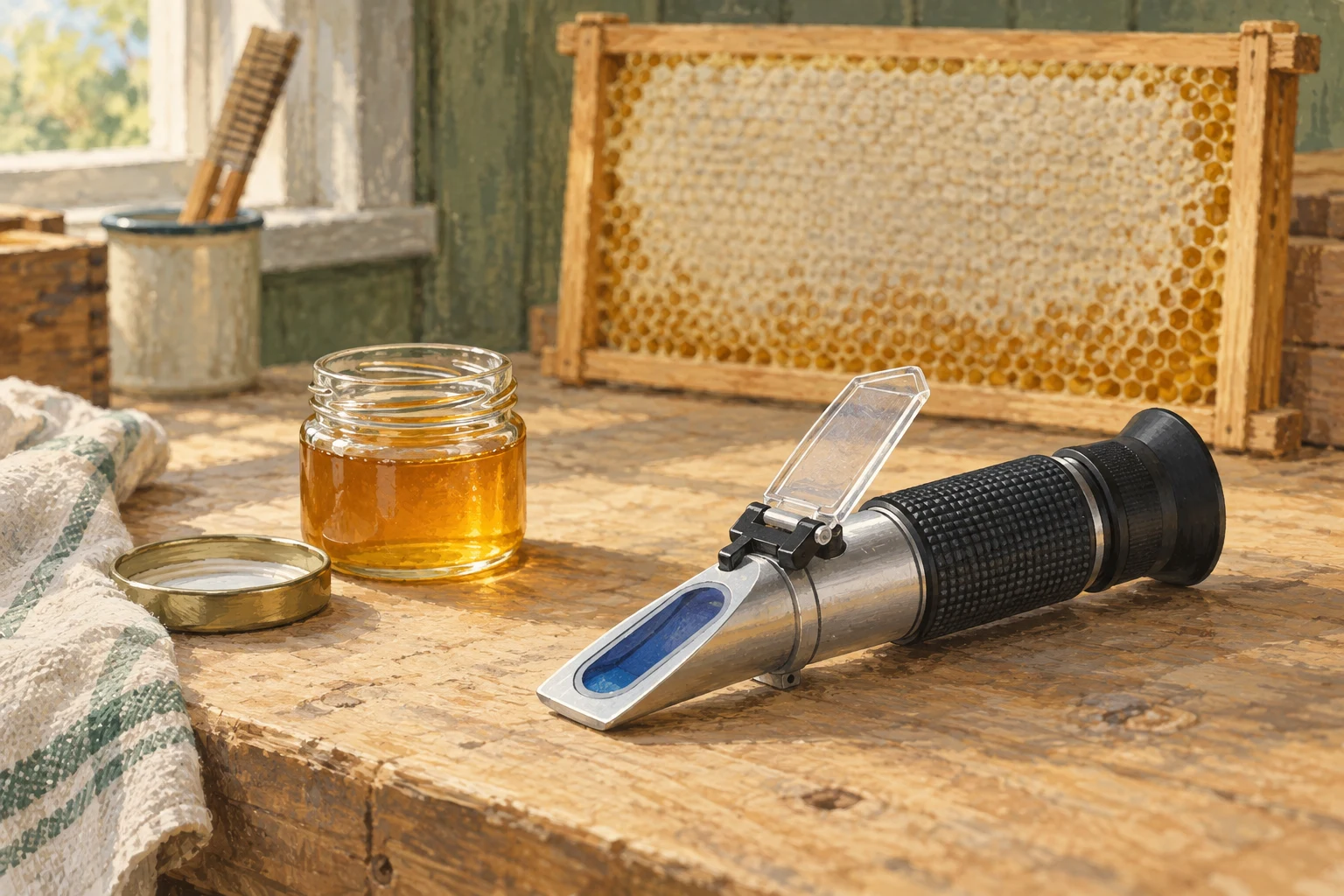
Cappings are a clue, not a measurement
Bees can cap honey with more water than a beekeeper expects. Ask Extension explicitly advises checking harvested honey with a refractometer rather than assuming capped cells are below 18% moisture. Floral sources and weather conditions are among the factors it identifies.
A reading from one selected cell answers a question about that sample. It should not become an unsupported statement about every frame in the stack. Keep the identity of the honey you are checking clear, especially before combining harvests.
Choose a quality target before looking at the scale
Agroscope, the Swiss agricultural research institute, recommends water content below 17.5% as an ideal for good storage quality. Treat that as the stated quality recommendation, not a universal legal limit or a certificate that a jar meets every food-quality requirement.
For honey you intend to sell, check the current requirements for your market and honey type with the relevant food authority or quality scheme. Decide on an appropriate working target with local guidance; do not change it merely because the first reading is inconvenient.
This is a harvest and bottling check wherever you keep bees. An October publication date is not a recommendation to take more stores from colonies preparing for winter in temperate Europe.
Start with the instrument’s own instructions
Use an instrument intended for honey and read the scale explicitly labelled for honey moisture or water content. Record that unit with the result. On an optical instrument, focus the scale and read the boundary as its manual describes.
Check calibration using the reference and procedure specified for your model. For example, Thorne’s instructions for its illuminated honey refractometer specify an oil reference. That does not make oil a universal calibration liquid for every device. Do not copy a water-zeroing or oil-calibration recipe from an unrelated instrument.
If the manual is missing, obtain it from the supplier before adjusting the calibration screw. Two instruments that look alike need not share a procedure.
Make the sample worth measuring
The International Honey Commission’s method calls for a representative, homogenised sample, a clean and dry prism, controlled temperature and duplicate measurements. Those principles explain why a quick drop from an unmixed container can be a poor shortcut.
For a routine check of liquid honey, follow this sequence alongside your model’s instructions:
- Identify the frame, container or batch. Prepare a representative, well-mixed sample using clean, dry equipment.
- Clean and dry the prism. Apply enough honey to cover the measuring surface evenly, as directed by the manufacturer.
- Allow the sample and instrument to reach the measurement conditions specified in the manual; do not rush a reading immediately after a temperature change.
- Repeat the measurement with a fresh portion. If results disagree, investigate the sampling, temperature and instrument check instead of choosing the lower number.
- For crystallised or separated honey, use a recognised sample-preparation method or an appropriate laboratory. A drop of the liquid portion alone does not represent the whole jar.
Write more than “17.4”
Here is an invented example of a useful note: “Batch A, container 2; measured 9 October; liquid sample mixed; instrument reference check passed; readings 17.4% and 17.5% water; sample temperature and instrument model recorded on the batch sheet.” These are example values, not results from our apiary or a release decision.
ApiNote supports harvest records with moisture and a comment. Enter the measured result and use the comment to connect it to your own batch identifier and fuller measurement sheet. The app stores your entry; it does not measure the honey or certify the batch.
Keep quantity planning separate from quality checks. Once a batch is ready for packing, the free honey harvest and jar calculator can estimate jar numbers from its net weight. It cannot assess moisture.
If the result is unexpected, pause the batch
Keep the honey identifiable and separate while you confirm the reading. Recheck the instrument and sample; if uncertainty remains, ask a trained local adviser or honey-testing laboratory before bottling for sale. Do not mix it into another container just to lose track of the result.
The useful outcome is a defensible decision about a known batch. A low-looking number without a reliable sample and instrument check does not provide that.
Sources & further reading
- Ask Extension — Water content of honey (2021)
- Agroscope — Honey: water content and quality
- International Honey Commission — Harmonised Methods (2009), sampling and moisture determination
- Thorne — Instructions for the illuminated honey refractometer (model-specific)
- ApiNote — Honey harvest and jar calculator (packing estimates, not moisture testing)
ApiNote · iOS & Android
Good notes make the next visit easier.
Give every colony a history you can find again. ApiNote is available for iOS and Android, free for up to five hives.
Compare Free & ProKeep exploring
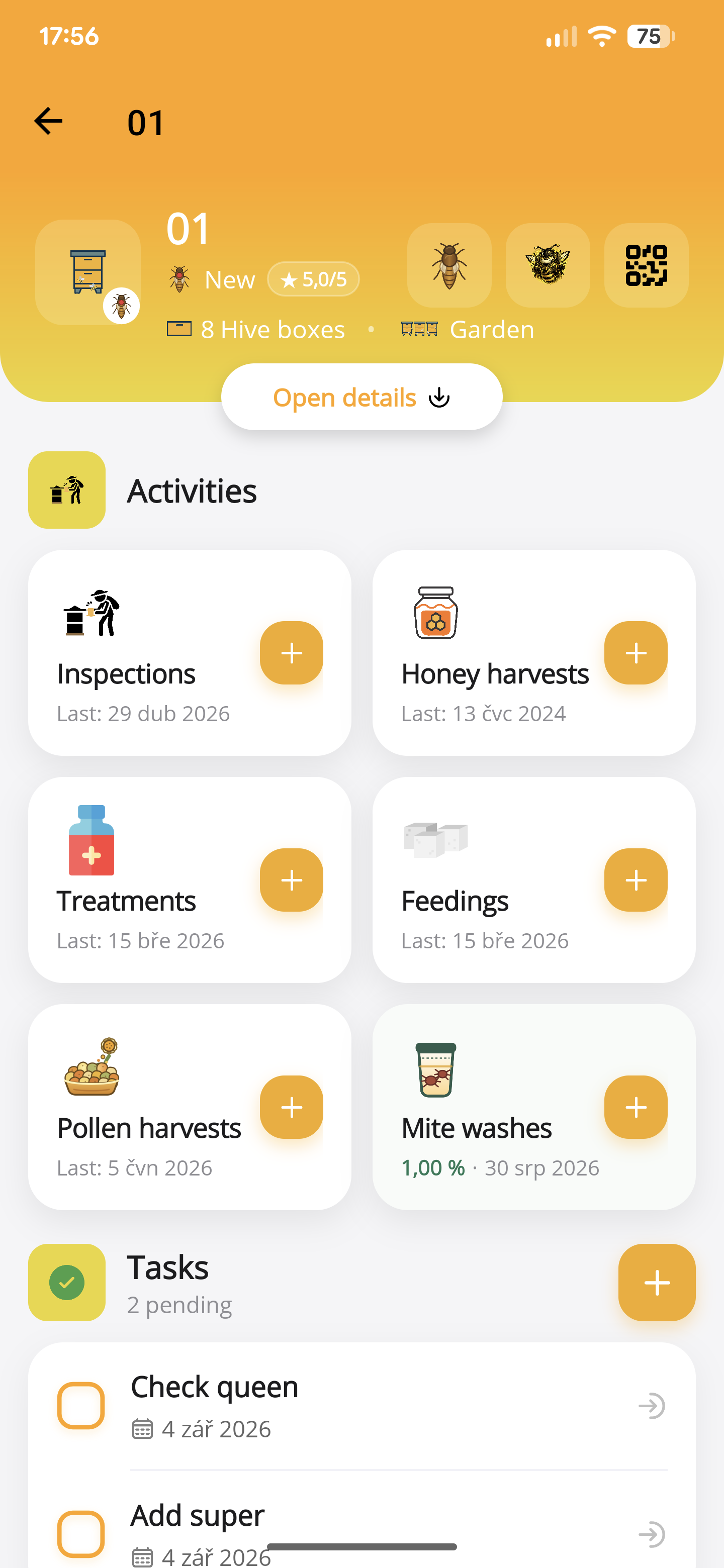
How to export your ApiNote records—and check the copy
Create a CSV or ZIP export from ApiNote, save it somewhere you can find, check its contents and keep inspection photos separately.
Updated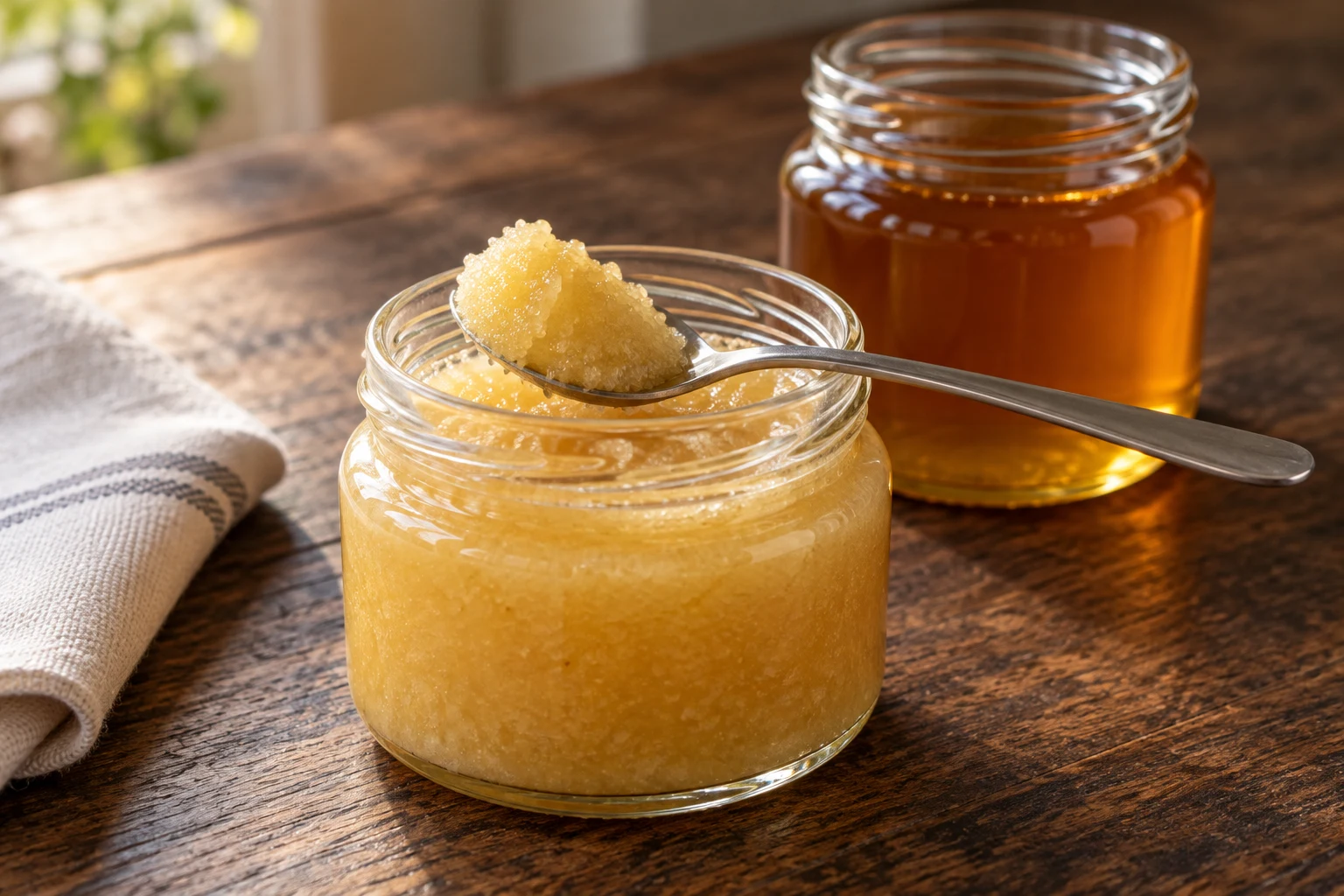
Why honey turns grainy: a guide to crystallization
A grainy jar is not automatically spoiled. Learn why honey crystallizes, why texture cannot prove purity, and how to store or gently soften set honey.
Updated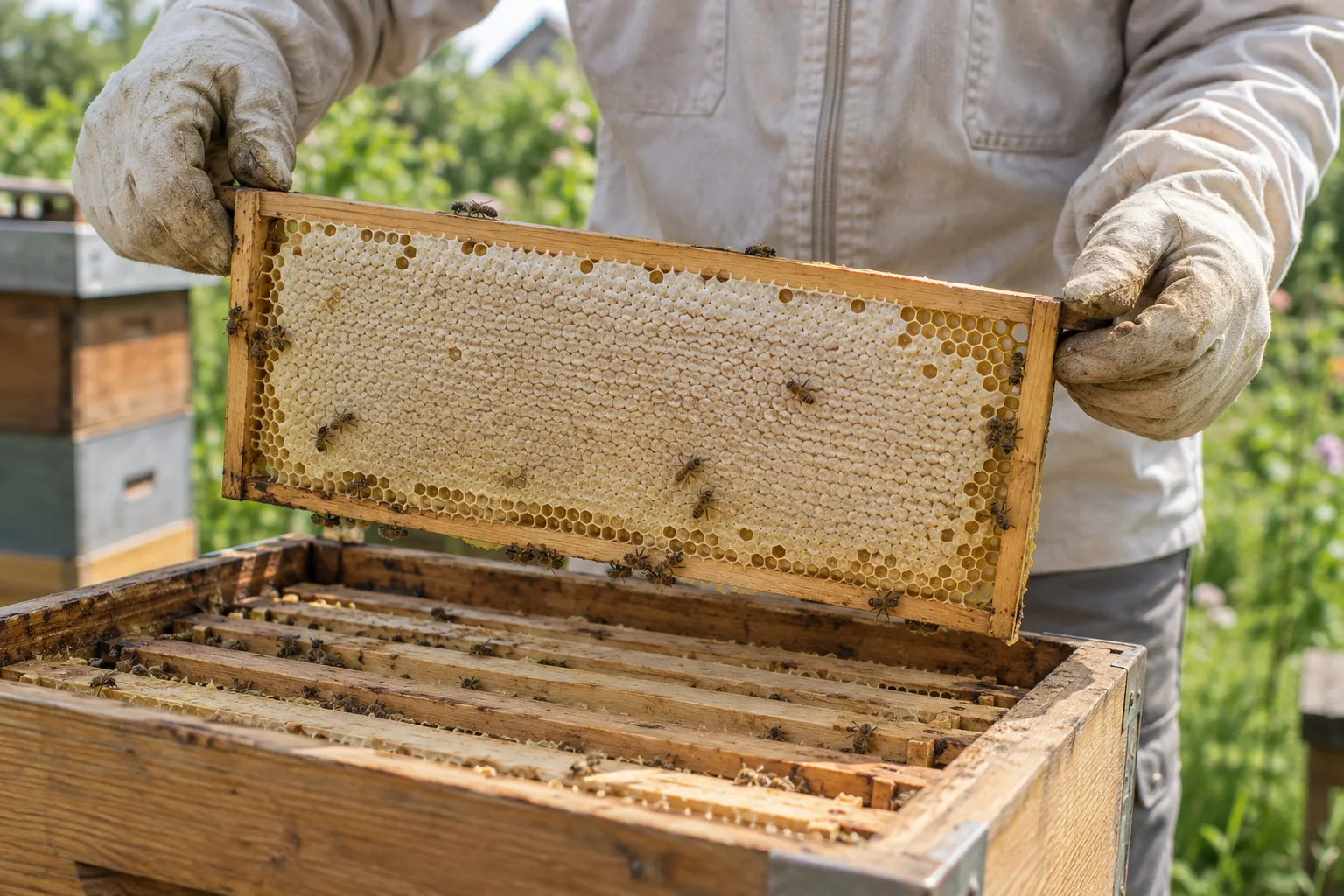
Plan a honey harvest without losing the colony’s context
Connect forage, colony strength, harvest readiness and the records behind each crop. A grounded alternative to guaranteed honey-production hacks.
Updated